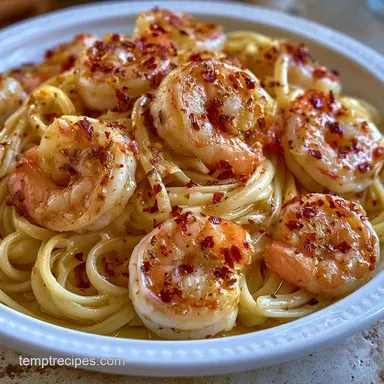
Garlic Butter Shrimp Pasta in 25 Minutes
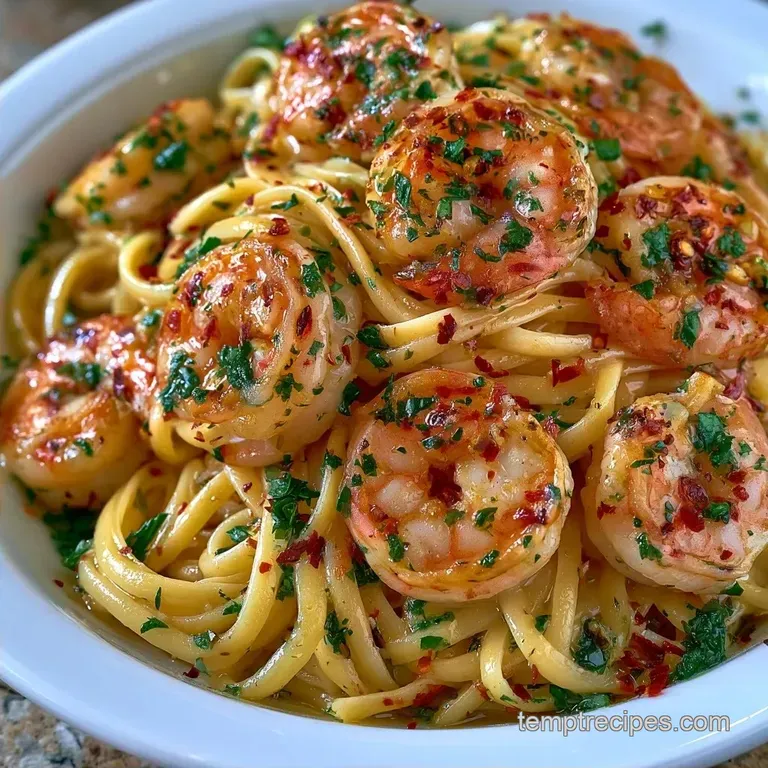
- Time: 10 min active + 15 min cook
- Flavor/Texture Hook: Buttery, garlicky, and bright with lemon
- Perfect for: Stress free weeknight dinners
That sharp, salty pop of shrimp hitting hot butter is the best sound in the kitchen. It’s the sound of a Tuesday night turning into something actually special without needing a reservation or a fancy outfit.
I remember the first time I tried to make this for a date, and I panicked, overcooking the shrimp until they were like rubber balls. I learned the hard way that shrimp don't need a long time in the pan, just a quick sear.
This Garlic Butter Shrimp Pasta is my go to when I want comfort but don't have the energy for a million pots and pans. It's a satisfying dish that relies on a few high-quality ingredients to do the heavy lifting.
You get the richness of the butter, the bite of the garlic, and a hit of acid from the lemon to keep it from feeling too heavy.
Expect a meal that comes together in about 25 minutes. We'll use a single skillet for the protein and sauce, which means your cleanup is basically non existent. It's the kind of recipe that makes you feel like a pro even if you're just cooking in your pajamas.
Garlic Butter Shrimp Pasta
The real magic here is the pasta water. Most people just drain the pot and move on, but that cloudy, starchy liquid is what turns a puddle of melted butter into a cohesive sauce. When you toss the noodles back into the pan with the butter and wine, the starch acts as a bridge, binding the fat to the pasta.
Starchy Water: The reserved pasta water thickens the sauce so it doesn't just slide off the noodles. Butter Oil Blend: Mixing olive oil with butter stops the butter from burning at the high heat needed to sear the shrimp.
Right then, let's look at the different ways you can approach the heat. While I always stick to the skillet, some people try to bake their shrimp.
| Method | Time | Texture | Best For |
|---|---|---|---|
| Stovetop | 15 min | Searing/Snappy | Fast weeknights |
| Oven | 25 min | Even/Tender | Large crowds |
Quick Recipe Specs
For the best results, keep an eye on these three precision checkpoints. First, the shrimp only need 2 minutes per side. Second, your garlic should be pale gold, not brown, after 1 minute of sautéing. Third, make sure you save exactly 1 cup of pasta water before draining.
- - If you want it zesty
- Double the lemon juice.
- - If you want it spicy
- Add an extra pinch of red pepper flakes.
- - If you want it richer
- Stir in a knob of cold butter at the very end.
Ingredient Deep Dive
Every single item in this pan has a job. The white wine isn't just for flavor, it actually deglazes the pan, picking up all those browned shrimp bits from the bottom to add depth to the sauce.
| Ingredient | What It Does | Best Swap |
|---|---|---|
| Dry White Wine | Adds acidity and lifts browned bits | Chicken broth with a squeeze of lemon |
| Parmesan Cheese | Adds salt and helps thicken | Pecorino Romano (saltier) |
| Unsalted Butter | Creates the rich, glossy base | Ghee or margarine |
| Large Shrimp | Provides the main protein | Scallops or bay scallops |
Essential Kitchen Tools
I love this recipe because you don't need a professional setup. A large pot for the pasta and one heavy bottomed skillet are the only real requirements. I prefer a stainless steel or cast iron skillet because they hold heat better, which helps the shrimp get that nice brown crust.
You'll also need a colander, a garlic press (or a sharp knife), and a pair of tongs. Tongs are far better than a spoon for tossing the pasta, as they ensure every strand is coated in the garlic butter without breaking the noodles.
Step-by-step Cooking
Let's crack on with the process. Keep your shrimp patted dry, or they'll steam instead of sear.
- Boil a large pot of water with 1 tbsp (15g) salt. Add 1 lb (450g) linguine and cook until al dente. Note: Al dente means it still has a slight bite, which prevents mushiness when tossed in the sauce.
- Scoop out 1 cup (240ml) of the cloudy pasta water before draining the noodles.
- Pat the shrimp dry with paper towels.
- Melt 2 tbsp (28g) butter and 2 tbsp (30ml) olive oil in a large skillet over medium high heat.
- Add the shrimp in a single layer. Season with $frac{1}{2}$ tsp (3g) salt, $frac{1}{4}$ tsp (1g) pepper, and $
frac{1}{2}$ tsp (3g) red pepper flakes. - Cook 2 mins per side until opaque pink and just curled. Move the shrimp to a plate immediately.
- Lower heat to medium and add 3 tbsp (42g) butter.
- Add 5 cloves (15g) minced garlic and sauté 1 min until fragrant and pale gold.
- Pour in $
frac{1}{4}$ cup (60ml) white wine. Use a wooden spoon to scrape the bottom of the pan. - Toss the pasta, $
frac{1}{4}$ cup (60g) Parmesan, 1 tbsp (15ml) lemon juice, and the reserved pasta water into the pan. Stir 2 mins until the sauce thickens and looks glossy. - Stir the shrimp back in with 2 tbsp (8g) chopped parsley.
Chef's Note: If the sauce looks too thick, splash in more pasta water. If it's too thin, let it bubble for another minute before adding the cheese.
Fixing Common Issues
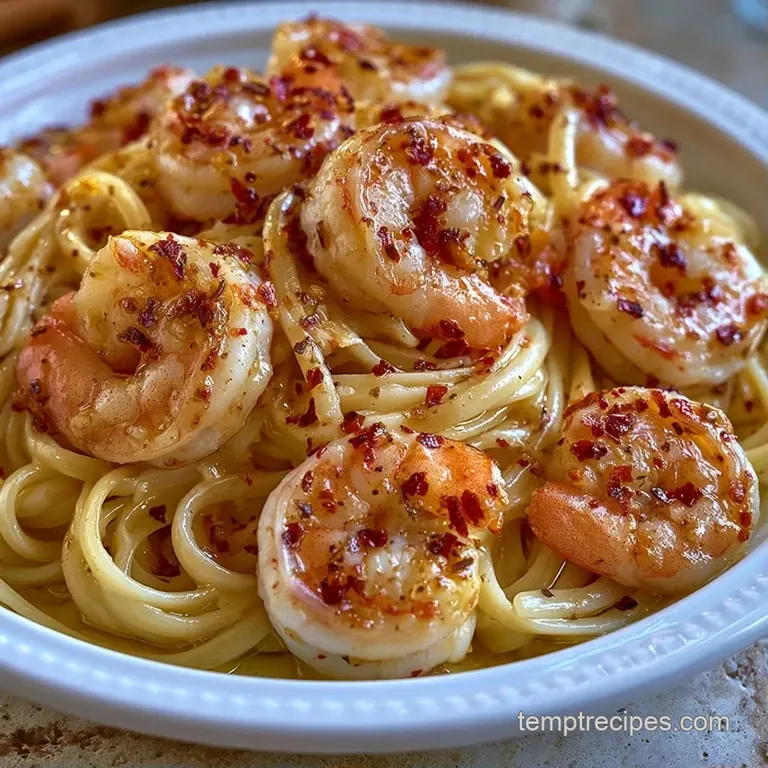
The most common frustration with Garlic Butter Shrimp Pasta is the sauce consistency. It's a fine line between a smooth sauce and a greasy mess.
Oily Sauce Fixes
If your sauce separates, it usually means the fat didn't bond with the water. This happens if the heat is too high or you didn't use enough pasta water.
| Problem | Root Cause | Solution |
|---|---|---|
| Greasy surface | Not enough starch | Add 2 tbsp pasta water and whisk rapidly |
| Sauce too thin | Not enough reduction | Simmer for 2 more mins before adding cheese |
| Broken emulsion | Heat too high | Remove from heat and stir in a pinch of cheese |
Bitter Garlic Fixes
Garlic burns in a heartbeat. If it turns dark brown, it becomes bitter and ruins the whole pan.
| Problem | Root Cause | Solution |
|---|---|---|
| Bitter taste | Garlic overcooked | Wipe pan and restart the garlic base |
| Raw garlic flavor | Undercooked | Sauté for another 30 seconds on low |
| Pungent aroma | Too much garlic | Balance with extra lemon juice |
Rubbery Shrimp Fixes
Overcooked shrimp are a classic mistake. They shrink and get a tough, bouncy texture.
| Problem | Root Cause | Solution |
|---|---|---|
| Rubber texture | Cooked too long | Pull shrimp off the heat as soon as they turn pink |
| Shrunken shrimp | Heat too high | Use medium high, not high, heat |
| Watery shrimp | Not patted dry | Use paper towels to dry shrimp before searing |
Twists and Ingredient Swaps
One of the best things about this recipe is how flexible it is. You can easily lean into a different flavor profile depending on what's in your fridge.
If you're in the mood for something even richer, my creamy garlic pasta sauce is a great alternative for the base. For those who want a red base, a tomato ricotta pasta sauce hits the spot.
| Original Ingredient | Substitute | Why It Works |
|---|---|---|
| White Wine (1/4 cup) | Lemon juice + broth | Same acidity. Note: Lacks the depth of fermented grapes |
| Linguine (1 lb) | Fettuccine (1 lb) | Similar width. Note: Slightly wider surface for sauce |
| Parmesan (1/4 cup) | Pecorino (1/4 cup) | Hard sheep's cheese. Note: Much saltier than cow's milk cheese |
| Large Shrimp (1 lb) | Scallops (1 lb) | Similar cook time. Note: Sweeter, more delicate flavor |
If you want to make a Healthy Garlic Butter Shrimp Pasta, you can swap the linguine for zoodles or spaghetti squash. Just be mindful that vegetables release more water, so you'll want to skip the reserved pasta water entirely to avoid a soup.
Scaling the Portions
Adjusting this recipe is straightforward, but you have to be careful with the pan size.
Scaling Down (1/2 batch): Use a smaller 10 inch skillet. Reduce the garlic to 3 cloves instead of 2.5 to keep the flavor punchy. Your cook times for the shrimp remain the same, but the sauce will reduce much faster because there's less volume.
Scaling Up (2x batch): Do not crowd the pan. If you put 2 lbs of shrimp in one skillet, they will release too much moisture and boil instead of searing. Work in two batches for the shrimp. For the sauce, increase the butter and wine by 1.5x rather than double, as the liquid doesn't scale linearly.
Dish Myths
You've probably heard that searing shrimp "locks in the juices." This is a myth. Searing creates a flavorful crust, but it doesn't create a waterproof seal. Moisture loss happens whether you sear or steam, but the sear gives you that savory depth.
Another common mistake is adding oil to the pasta water. People think it stops the noodles from sticking. In reality, oil just coats the pasta in a slippery film, which actually prevents the Garlic Butter Shrimp Pasta sauce from clinging to the noodles. Stick to plenty of salt and a rolling boil.
Storage and Leftovers
This dish is definitely best eaten immediately, but leftovers can be managed.
Fridge Storage: Store in an airtight container for up to 3 days. The pasta will absorb the sauce as it sits, so it might look a bit dry when you open it.
Freezing: I don't recommend freezing this. The emulsion in the sauce breaks during the freeze thaw cycle, and the shrimp often become mealy.
Reheating: Avoid the microwave if you can. Instead, put the pasta in a skillet over medium heat. Add a splash of water or a small knob of butter to loosen the sauce. Heat it just until it's warm, then remove it. If you overheat the shrimp, they'll turn into rubber again.
Zero Waste Tips: Don't toss those shrimp shells! If you peeled your own, simmer the shells in water with a bit of onion and celery for 20 minutes to make a quick shrimp stock. You can freeze this stock in ice cube trays and use it for risotto or other seafood dishes later.
Serving and Pairings
To turn this into a full meal, I like to keep the sides light since the pasta is quite rich. A crisp arugula salad with a simple lemon vinaigrette cuts through the butter perfectly. If you want something heartier, a piece of toasted sourdough rubbed with a raw garlic clove is the way to go.
For a drink, a chilled glass of the same white wine you used in the sauce (like a Sauvignon Blanc or Pinot Grigio) is the classic choice. The acidity in the wine mirrors the lemon in the dish, cleaning your palate between bites. If you're avoiding alcohol, a sparkling water with a wedge of lime works just as well.
The presentation is simple. Pile the pasta high in a shallow bowl and nestle the shrimp on top. A final sprinkle of fresh parsley and a dusting of extra Parmesan make it look like it came from a bistro. This Garlic Butter Shrimp Pasta is all about those bold, comforting flavors that make a house feel like a home.
High in Sodium
813 mg 813 mg of sodium per serving (35% 35% of daily value)
The American Heart Association recommends a daily sodium limit of no more than 2,300 mg for most adults to maintain heart health.
Tips to Reduce Sodium
-
Reduce Pasta Water Salt-30%
Omit or significantly reduce the 1 tbsp of salt used for boiling the pasta; much of this is wasted, but it still contributes to the overall profile.
-
Cut Added Seasoning Salt-25%
Replace the ½ tsp of salt used to season the shrimp with extra black pepper or a pinch of paprika for flavor without the sodium.
-
Minimize Parmesan Cheese-15%
Reduce the ¼ cup of Parmesan cheese by half, as aged cheeses are naturally high in sodium.
-
Boost Acid and Herbs
Increase the fresh lemon juice and parsley to add bright, zesty notes that trick the palate into needing less salt.
Recipe FAQs
What goes with Garlic Butter Shrimp pasta?
Crusty garlic bread or a crisp green salad. These sides balance the richness of the butter and parmesan. If you prefer an even richer experience, the same flavor profile is used in our parmesan cream sauce.
How to make easy garlic shrimp pasta?
Boil linguine until al dente and sear patted dry shrimp in butter and oil. Combine the pasta with a sauce made from sautéed garlic, white wine, parmesan, and lemon juice.
How to make butter garlic pasta sauce?
Sauté minced garlic in butter over medium heat until pale gold. Deglaze the pan with white wine to release browned shrimp bits, then stir in parmesan cheese and lemon juice.
What kind of sauce is best for shrimp pasta?
A light garlic butter or lemon based sauce. These options highlight the natural sweetness of the shrimp without overpowering the seafood.
Can I freeze leftover shrimp pasta?
No, it is not recommended. Freezing breaks the sauce emulsion and often makes the shrimp mealy and rubbery.
Is it true that I should boil the shrimp with the pasta?
No, this is a common misconception. Boiling shrimp often overcooks them; searing them in a skillet ensures a better texture and deeper flavor.
How to prevent the shrimp from becoming rubbery?
Cook for exactly 2 minutes per side over medium high heat. Remove the shrimp from the pan immediately once they are opaque pink and just curled.
Garlic Butter Shrimp Pasta