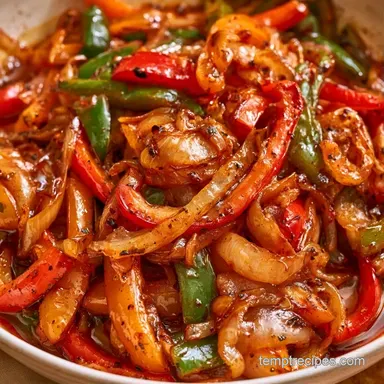
Sauteed Bell Peppers and Onions Recipe in 24 Minutes
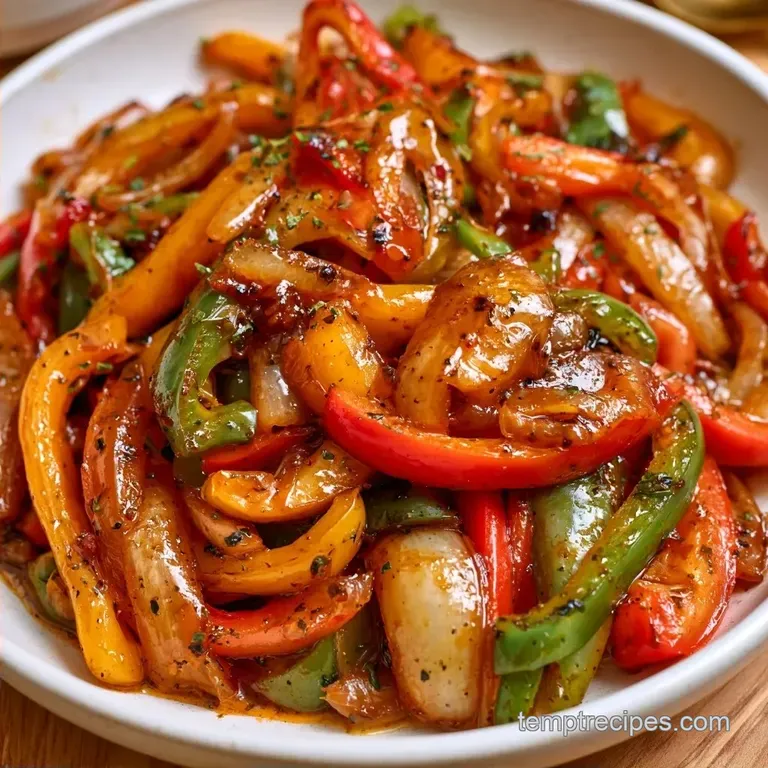
- Time: 10 minutes prep + 15 minutes stovetop
- Key Highlight: Deep mahogany char paired with tender-crisp centers
- Perfect for: Easy weekday side dishes or fillings for fajitas
- Sauteed Bell Peppers and Onions Recipe
- Essential Recipe Specs
- What Actually Makes It Work
- Ingredients and Smart Swaps
- Must Have Kitchen Tools
- Simple Cooking Steps
- Fixing Common Cooking Issues
- Flavor Tweaks and Variations
- Storage and Waste Tips
- Serving Suggestions
- Adjusting the Batch Size
- Common Kitchen Myths
- Recipe FAQs
- 📝 Recipe Card
Sauteed Bell Peppers and Onions Recipe
Nothing beats that sharp sizzle when sliced peppers hit a scorching pan. I once believed that achieving that classic steakhouse taste required an hour of constant attention and endless stirring. It felt like a slog, and more often than not, the vegetables just turned out soggy.
Eventually, I learned that the "low and slow" method is a misconception for this dish. You don't need a long, slow sweat to coax out the natural sugars. All that's required is the correct temperature and the restraint to let them sear undisturbed for a few minutes.
This Sauteed Bell Peppers and Onions Recipe delivers a rich, satisfying side without the long wait. It's an effortless method for achieving those caramelized flavors that elevate any dish, whether paired with a steak or layered into a sandwich.
Essential Recipe Specs
This dish focuses on a fast, over high heat flow. You prep everything first, sear hard, and finish with the aromatics. It's designed to be a supporting player for your main protein, providing a bright, savory contrast.
The key here is the "sear then soften" approach. Instead of boiling the vegetables in their own juice, we create a crust first. This locks in the structure while intensifying the natural sugars in the onion.
Since this is a fast cook, the timeline is tight. Once the pan is hot, you're moving quickly from the sear to the final seasoning.
What Actually Makes It Work
Most people stir too much. When you move the vegetables constantly, they drop their temperature and release water, which leads to steaming rather than searing.
- Butter Oil Mix
- Olive oil handles the high heat, while butter adds a velvety richness and helps the vegetables brown faster.
- The No Stir Window
- Leaving the veg alone for 3 minutes creates a mahogany crust, which is where the deep, savory flavor lives.
- Late Garlic Addition
- Garlic burns in about 60 seconds at this heat. Adding it at the very end keeps the flavor sharp and prevents bitterness.
| Method | Time | Texture | Best For |
|---|---|---|---|
| Sauté | 15 mins | Charred & Crisp | Steak sides, Fajitas |
| Oven Roast | 30 mins | Soft & Sweet | Meal prep, Sheet pan meals |
| Slow Cooker | 4 hours | Very Tender | Stews, Braised dishes |
Ingredients and Smart Swaps
I suggest using a combination of red, orange, and yellow peppers. This not only enhances the visual appeal but also introduces a broader range of sweetness.
| Ingredient | What It Does | Best Swap |
|---|---|---|
| Bell Peppers | Adds volume and sweetness | Poblano peppers (for a smoky kick) |
| Yellow Onion | Lends savory depth | Red onion (sharper, more vivid color) |
| Unsalted Butter | Promotes browning and richness | Ghee (higher smoke point) |
| Garlic Powder | Ensures a consistent savory base | Onion powder (milder flavor) |
Fresh Produce
- 3 large bell peppers, multi colored (approx. 1 lb / 450g) Why this? A variety of colors balances the overall sweetness.
- 1 large yellow or red onion (approx. 8 oz / 225g) Why this? Yellow onions are the most reliable for caramelizing.
- 3 cloves garlic, minced (approx. 15g) Why this? Using fresh garlic provides a punchy finish.
Sautéed Peppers and Onions Seasoning
- 2 tbsp extra virgin olive oil Why this? It is a stable fat for medium high heat.
- 1 tbsp unsalted butter Why this? It delivers that classic steakhouse taste.
- 1/2 tsp kosher salt Why this? It helps draw out moisture for a better sear.
- 1/4 tsp freshly cracked black pepper Why this? It adds a subtle, earthy warmth.
- 1/2 tsp garlic powder Why this? It builds layers of garlic flavor throughout.
Must Have Kitchen Tools
You need a heavy bottomed skillet. Cast iron is my go to here because it holds heat much better than thin stainless steel. If the pan cools down too much when you add the vegetables, you'll get steam instead of a sear.
A sharp chef's knife is also a must. Since we want uniform 1/4 inch strips, a dull knife will crush the vegetables rather than slice them, which causes them to leak water into the pan.
Finally, use a wide spatula. You want to be able to flip large sections of the vegetables without breaking the strips.
Simple Cooking Steps
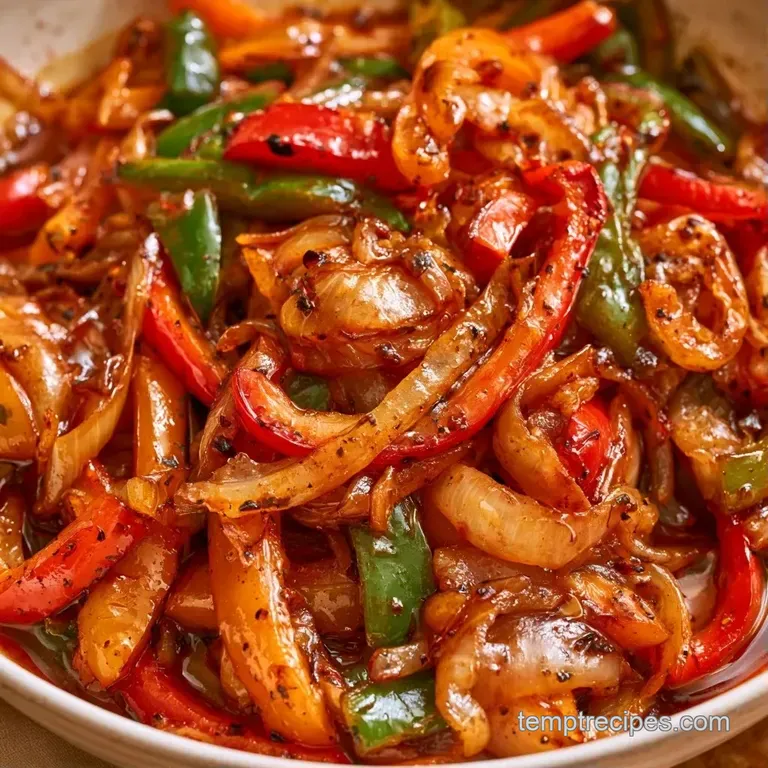
1. Uniform Prep
Cut the bell peppers and onions into even strips, roughly 1/4 inch (6mm) thick, and place them in a bowl. Keeping the sizes consistent ensures everything cooks at the same rate.
2. High Heat Searing
Set your skillet to medium high heat. Add the olive oil and butter, waiting until the butter foams and begins to brown before adding the veg.
3. Initial Browning
Arrange the onions and peppers in a single layer. Avoid stirring for the first 3 minutes. This crucial step creates a rich, mahogany colored crust on the bottom.
4. The Softening Stage
Stir the vegetables and cook for an additional 7-10 minutes, tossing occasionally. You want the edges to be charred while the centers stay tender crisp.
5. Final Seasoning
Mix in the minced garlic, salt, black pepper, and garlic powder. Sauté for exactly 60 seconds. Lift the pan from the heat the moment the garlic smells fragrant to prevent scorching.
Chef's Note: If cooking for a large group, use two batches. Overcrowding the skillet drops the heat, causing the vegetables to steam rather than sauté.
Fixing Common Cooking Issues
Stopping the Steam
If your vegetables appear pale and are swimming in liquid, you've probably overcrowded the pan or stirred too soon. To fix this, increase the heat and leave them undisturbed for 2-3 minutes. This evaporates the extra moisture and lets the searing process restart.
Saving Over Salted Veggies
Should you accidentally over salt the dish, add a bit of fresh lemon juice or a teaspoon of apple cider vinegar. The acidity balances the saltiness without altering the texture of the vegetables.
Preventing Burnt Garlic
Garlic burns very quickly. If it turns dark brown or black, it will taste bitter. Immediately move the pan off the heat and stir in a small knob of cold butter to halt the cooking process.
Flavor Tweaks and Variations
2 Culinary Twists
For a smoky version, swap the olive oil for bacon grease. It adds a salty, wood fired depth that pairs well with grilled meats. If you want a bit of heat, add a pinch of crushed red pepper flakes when you add the garlic.
2 Diet Friendly Swaps
If you're avoiding dairy, swap the butter for avocado oil. It has a higher smoke point and keeps the dish vegan. For a lower carb approach, these are already great, but you can add sliced mushrooms to increase the heartiness without adding sugar.
If you're looking for a full meal, these are a great addition to my Pepper Pasta for 6 recipe. , if you have leftover peppers, they work beautifully in a Stuffed Bell Peppers recipe.
Decision Shortcut
- Extra sweetness? → add 1 tsp brown sugar during the final minute.
- More tang? → fold in 1 tsp balsamic glaze at the end.
- Heartier feel? → add sliced portobello mushrooms with the onions.
Storage and Waste Tips
Keep these in a glass jar in the refrigerator for as long as 3 days. The flavor stays intact, though the texture will soften slightly.
To freeze, let them cool entirely before transferring them to a freezer safe bag. They will keep for about 2 months. Because the texture softens significantly upon thawing, they are better suited for pasta sauces or omelets instead of as a standalone side.
Minimize waste by storing onion skins and pepper seeds in a freezer bag. When the bag is packed, boil them together with celery and carrot scraps to make a simple vegetable stock.
Serving Suggestions
These pair perfectly with a grilled ribeye or New York strip, as the sweetness of the peppers balances the rich beef. For a lighter alternative, serve them over grilled chicken breasts or use them as a filling for a toasted ciabatta sandwich with melted provolone.
The Best Way to Reheat
Steer clear of the microwave, which can make the peppers gummy. Instead, sauté them in a hot skillet with a teaspoon of oil for 2-3 minutes. This restores the charred edges and refreshes the overall texture.
Adding Hearty Protein
To make this a complete meal, stir in sliced Italian sausages during the first 5 minutes of cooking. The sausages will brown and release flavorful fats for the peppers to absorb, creating a simple one-pan dinner.
Adjusting the Batch Size
Scaling Down
For a single serving, use 1 pepper and half an onion. Use a smaller 8 inch skillet to ensure you still get that single layer for searing. Reduce the cooking time by about 20%, as the smaller volume heats up faster.
Scaling Up
When doubling or tripling this recipe, do not just use a bigger pan. Even in a large skillet, too many vegetables will cause steaming. Work in batches, searing the veg in two or three groups, then combine them all at the end for the final seasoning.
Regarding spices, don't double the salt and pepper linearly. Start with 1.5x the seasoning, taste it, and add more if needed. Liquids like oil and butter can be reduced by about 10% when doubling.
Common Kitchen Myths
Searing vegetables doesn't "lock in" nutrients, but it does change the flavor profile through caramelization. The high heat breaks down complex sugars into simpler ones, which is why they taste sweeter.
Another myth is that you must use a specific type of pepper for this. While red peppers are sweeter, green peppers add a slightly bitter, earthy note that balances rich meats. Use whatever is in your crisper drawer.
According to USDA guidance, cooked vegetables should be refrigerated within two hours to stay safe. This prevents bacteria from growing in the moist environment of the sautéed veg. For precise nutritional tracking, you can check USDA FoodData Central.
Recipe FAQs
Should onions be sautéed before the peppers?
Sauté both vegetables at the same time in the skillet.
Tip: keep them in a single layer to ensure they brown rather than steam.
How to prevent the vegetables from getting soggy?
Cook over medium high heat and avoid stirring for the first 3 minutes.
Tip: slice everything to a uniform 1/4 inch thickness for even cooking.
Which seasonings work best for this recipe?
Salt, black pepper, and garlic powder provide a classic flavor profile.
Tip: these flavors pair perfectly with a cheesesteak meatloaf.
Is it true that oil is better than butter for sautéing?
This one's false: combining both olive oil and butter offers the best flavor and heat tolerance.
Tip: add the vegetables only after the butter foams and begins to brown.
Sauteed Bell Peppers And Onions