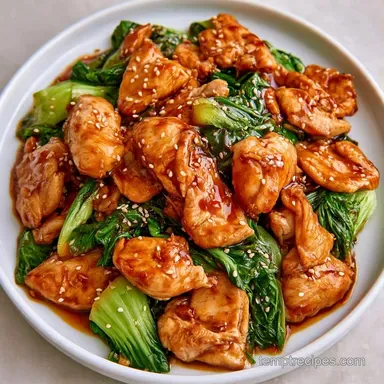
Sesame Chicken Bok Choy Stir Fry with Ginger
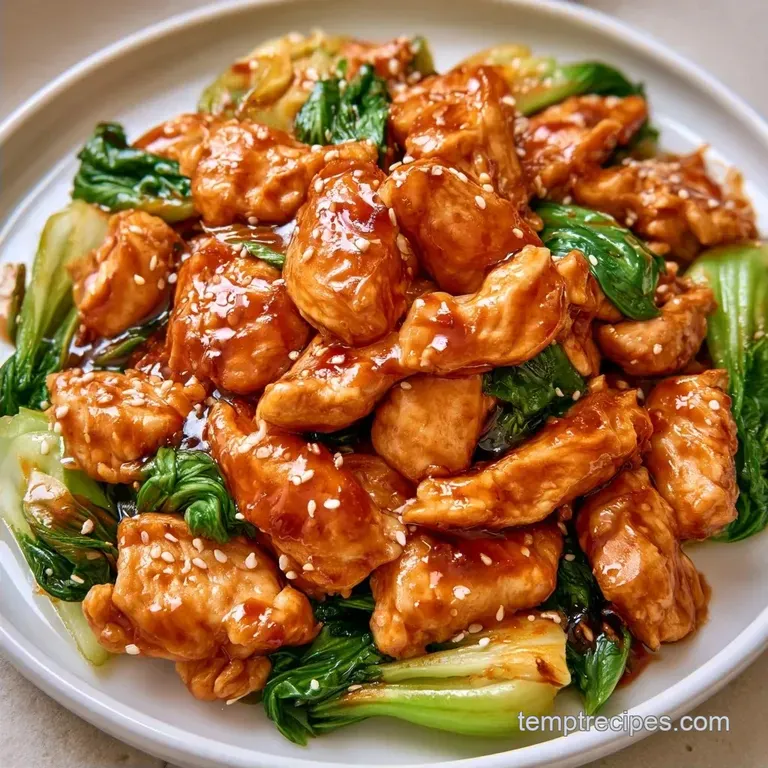
- Time: 10 min prep + 10 min cook
- Flavor/Texture Hook: Nutty, glossy glaze with crisp tender stems
- Perfect for: Stress free weeknight dinner
Bok choy has been a staple in Chinese kitchens for generations. In many households, it's more than just a side dish, it's a way to bring balance to a meal, pairing light, refreshing greens with savory proteins.
Growing up, the smell of ginger and toasted sesame oil hitting a hot pan always meant a comforting dinner was coming.
I used to struggle with this dish, often ending up with a pool of water in my pan and grey chicken. Once I learned to treat the chicken and the veg as two different stages of heat, everything changed.
This Sesame Chicken Bok Choy recipe is designed to be budget friendly. You don't need a fancy wok or expensive ingredients to get that deep, mahogany color and satisfying crunch.
Quick Specs for Sesame Chicken Bok Choy
First, let's cover the essentials. Since this dish comes together quickly, make sure all your chopping is finished before you turn on the heat.
To make things easier, I suggest mixing your sauce in a jar beforehand. The chicken sears rapidly, and you won't want to be searching for honey while the pan is sizzling.
Why the Heat Matters
Getting the temperature right is the only way to avoid a soggy mess. Here is why this method works:
- The Initial Sear: Using a shimmering oil creates a crust on the chicken, which locks in moisture and adds a deep, savory flavor.
- Starch Stability: The cornstarch in the glaze thickens almost instantly when it hits the pan, making the sauce cling to the ingredients.
| Component | Fresh Option | Shortcut Option | Impact |
|---|---|---|---|
| Ginger | Fresh Root | Ginger Paste | Fresh is zingier; paste is milder |
| Bok Choy | Baby Bok Choy | Large Bok Choy | Baby is tender; large needs more chopping |
| Honey | Raw Honey | Maple Syrup | Honey is thicker; maple adds a woody note |
The Building Blocks
Chicken breast is my top choice here for its lean profile and fast cook time, though thighs are a great alternative if you prefer a richer taste. I recommend baby bok choy because the leaves soften perfectly while the stems retain a nice snap.
For another way to prepare your greens, you might enjoy my soy sauce bok choy for a simpler side dish.
The Protein & Produce
- 1 lb boneless, skinless chicken breast, diced into 1 inch pieces Why this? Quickly sears and stays lean
- 1 lb baby bok choy, sliced lengthwise and ends removed Why this? Great contrast between crisp stems and soft leaves
- 2 tbsp neutral oil Why this? Handles high heat without smoking
- 3 cloves garlic, minced Why this? Provides a strong aromatic base
- 1 tbsp fresh ginger, grated Why this? Offers a bright, zesty heat
The Ginger Sesame Glaze
- 1/4 cup soy sauce Why this? Base for saltiness and umami
- 1 tbsp toasted sesame oil Why this? Brings a rich, nutty scent
- 1 tbsp honey Why this? Sweetness to offset the salt
- 1 tsp rice vinegar Why this? Acid to balance the richness
- 1 tsp cornstarch Why this? Thickens the sauce for a glossy finish
The Finishing Touches
- 1 tbsp toasted sesame seeds Why this? Adds a bit of crunch and visual appeal
- 2 stalks green onion, thinly sliced Why this? Bright, peppery final touch
Equipment Needed
While a basic home setup is fine, using a heavy pan makes a difference. A carbon steel wok or cast iron skillet is ideal since they retain heat so effectively. Be cautious with thin non-stick pans, as they can cause the chicken to steam rather than sear.
I prefer a small whisk for the sauce, but a fork is a great alternative. Just ensure the honey is well mixed and doesn't settle at the bottom.
How to Make It
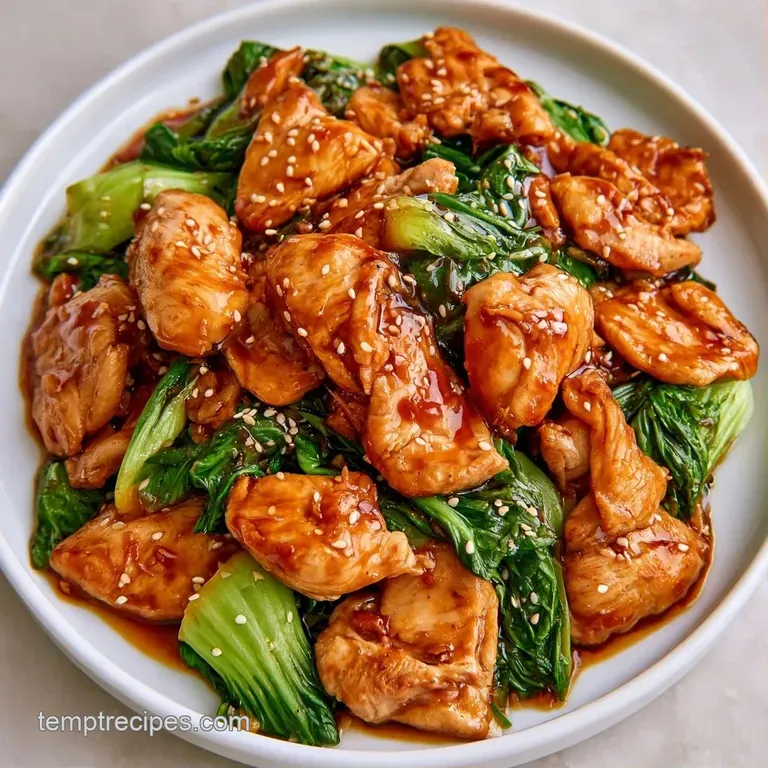
Phase 1: The Mise en Place
- Combine the soy sauce, toasted sesame oil, honey, rice vinegar, and cornstarch in a small bowl. Mix until the honey has completely dissolved.
- Slice the baby bok choy in half and mince the garlic and ginger.
Phase 2: Searing the Protein
- Warm the neutral oil in a large pan over medium high heat until it starts to glisten.
- Arrange the chicken cubes in a single layer. Let them sear undisturbed for 2-3 minutes until a mahogany crust forms.
- Stir in the minced garlic and ginger. Cook for 30 seconds until the aromatics are fragrant.
Phase 3: The Glaze and Greens
- Toss in the bok choy halves. Sauté for 2 minutes, flipping occasionally, so the leaves wilt while the stems stay crisp.
- Pour the sesame glaze over the ingredients. Toss constantly for 1-2 minutes until the sauce turns into a glossy coating.
- Remove from heat immediately. Garnish with sliced green onions and toasted sesame seeds.
Key Techniques Explained
The magic here is the "sear then steam" approach. By browning the chicken first, we get that deep flavor. Adding the bok choy later ensures we don't overcook the vegetables into a mushy pile.
Chef's Note: If your pan starts to smoke too much, pull it off the heat for 10 seconds before adding the garlic. Garlic burns in a heartbeat, and burnt garlic tastes bitter.
Pro Tips & Pitfalls
One thing I've learned is that overcrowding the pan is the enemy of a good stir fry. When you put too much meat in at once, the temperature drops, the chicken releases its juices, and you end up boiling the meat instead of searing it.
Another common issue is the sauce. If it looks too thin, you probably didn't toss it long enough for the cornstarch to activate. Just give it another 30 seconds on the heat.
Fixing a Watery Sauce
This usually happens when the bok choy is too wet after washing or the pan wasn't hot enough. Dry your greens thoroughly with a towel before they hit the oil.
Preventing Overcooked Greens
Bok choy cooks incredibly fast. The moment the leaves look dark green and limp, but the white stems still have a "snap" to them, it's time for the sauce.
Dealing with Burnt Garlic
If the garlic turns dark brown too quickly, it will ruin the flavor. Add the garlic and ginger only after the chicken is browned and the pan heat has stabilized slightly.
| Problem | Fix |
|---|---|
| Sauce is too thin | Simmer 30 seconds longer |
| Chicken is rubbery | Reduce sear time or use thighs |
| Greens are mushy | Add bok choy 1 minute earlier |
Storage & Reheating
Place any remaining Sesame Chicken Bok Choy in a glass container, where it will keep in the refrigerator for 3 days.
Avoid freezing this dish. Because of the bok choy's high water content, the vegetable will lose its texture and become limp and watery after thawing.
To reheat, warm the leftovers in a skillet over medium heat for 3-5 minutes. Stirring in a teaspoon of broth or water helps loosen the glaze and prevents it from becoming too sticky.
To reduce waste, keep any leftover bok choy stems. They are excellent diced into a quick omelet or a vegetable soup.
Flavor Variations to Try
If you want to change things up, try these tweaks:
- For a spicy kick: Stir in 1 tbsp of Sriracha or chili garlic sauce into the glaze.
- For a nutty crunch: Add a handful of roasted cashews or peanuts at the very end. If you love nutty flavors, you can pair this with a bok choy peanut sauce on the side.
- For a low sodium version: Use coconut aminos or low sodium soy sauce and increase the rice vinegar slightly to maintain the tang.
- For a Paleo/Keto adjustment: Swap the honey for a monk fruit sweetener or a touch of maple syrup.
How to Serve and Enjoy
This meal is filling on its own, but it's even better with a base to absorb the ginger sesame sauce.
For a standard pairing, serve it alongside steamed brown or jasmine rice. If you're looking for something a bit more special, soy sauce mushroom rice provides a savory umami depth that pairs beautifully with the chicken.
Those preferring a grain free option can use cauliflower rice or simple steamed quinoa. I also love serving a side of rice vinegar marinated cucumber slices for a cool, crisp contrast to the hot stir fry.
The final touch is the garnish. Be sure to add sesame seeds and green onions; they provide the vibrant color that makes the meal look as delicious as it tastes.
Recipe FAQs
Which chicken cut works best for this dish?
Boneless, skinless chicken breast is the best choice. It cooks quickly and absorbs the glaze evenly without adding excess fat.
What ingredients make up the sesame glaze?
This sauce combines soy sauce, toasted sesame oil, honey, rice vinegar, and cornstarch. These create a balanced sweet and savory profile that coats the protein.
Is it true that homemade sesame chicken is inherently unhealthy?
That's a myth. By controlling the honey and using a neutral oil for searing, you create a nutrient dense meal packed with greens.
How do you sauté bok choy to keep it crisp?
Toss the halves into a hot skillet for only two minutes. Flip them occasionally so the leaves wilt while the stems stay crunchy.
Can bok choy be paired with fish instead of chicken?
Yes, bok choy pairs beautifully with white fish or salmon. If you enjoyed balancing fresh greens here, see how we use a similar approach in our green pea sauce.
Are there other grains that pair well with this meal?
Steamed jasmine rice or fluffy couscous are excellent options. These grains soak up the extra sesame glaze perfectly.
How to prevent the sauce from becoming too thin?
Whisk cornstarch into the sauce mixture before adding it to the pan. This ensures the glaze thickens into a glossy coating within two minutes of cooking.
Why should I avoid freezing leftovers?
Freezing ruins the texture of the bok choy. The high water content causes the vegetable to become limp and watery once thawed.
Sesame Chicken Bok Choy