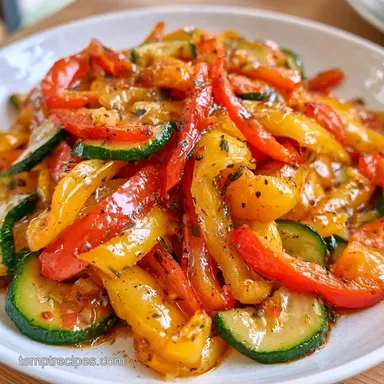
Sauteed Bell Peppers and Zucchini with Garlic
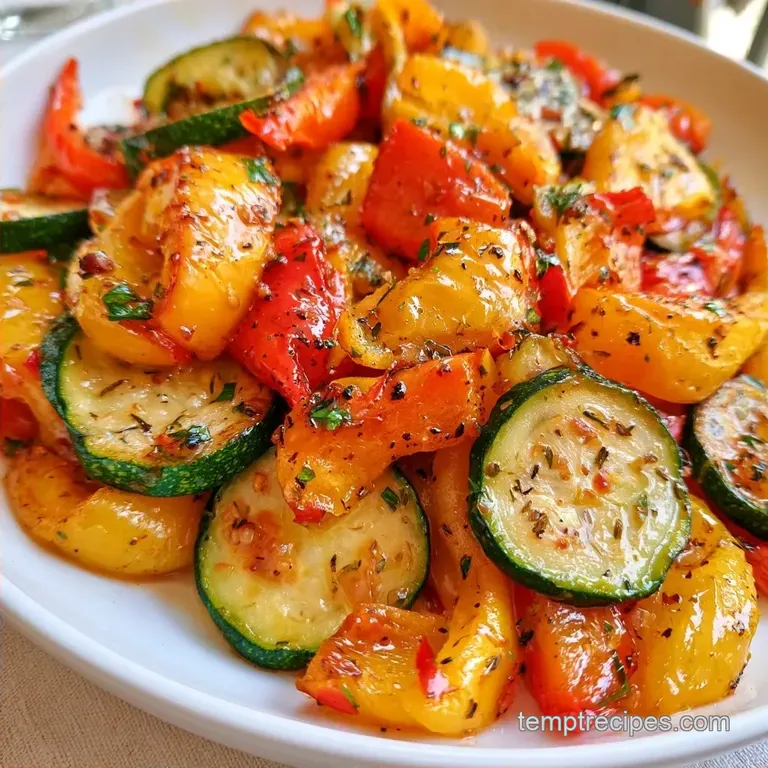
- Time:15 minutes prep + 10 minutes cook
- Flavor/Texture Hook: Charred edges with a bright, citrusy finish
- Perfect for: Simple weekday meals or a healthy meal prep side
- Sauteed Bell Peppers and Zucchini
- Why This Combo Works
- Ingredient Deep Dive
- Gathering the Produce
- Essential Pan and Tools
- Cooking the Veggies
- Fixes for Common Issues
- Adjusting the Batch Size
- Debunking Veggie Myths
- Creative Twists and Swaps
- Keeping It Fresh
- Serving Your Plate
- Recipe FAQs
- 📝 Recipe Card
That loud, aggressive sizzle when the peppers hit the hot oil is the best part. For years, I served "vegetable medleys" that were essentially steamed piles of mush, and I wrongly assumed more heat was the answer. Instead, I just scorched the garlic while the zucchini sat swimming in a pool of water.
The secret is the order of operations and avoiding a crowded pan. When you give the vegetables space to breathe, they brown instead of stewing. These Sauteed Bell Peppers and Zucchini develop those mahogany edges that offer real depth, rather than just tasting like salt and hot water.
You can expect a side dish that feels hearty and satisfying without being heavy. It's a low-effort recipe where the ingredients do the heavy lifting, and the lemon juice at the end awakens the whole dish.
Sauteed Bell Peppers and Zucchini
Why This Combo Works
High Heat Searing: Using medium high heat evaporates moisture quickly. This prevents the zucchini from releasing too much water and keeps it from getting gummy.
Layered Cooking: Adding peppers and onions first allows them to soften and brown. Zucchini cooks much faster, so adding it last ensures it keeps a bite.
Acid Finish: A splash of lemon juice cuts through the olive oil. It brightens the earthy notes of the oregano and garlic.
| Method | Time | Texture | Best For |
|---|---|---|---|
| Fast Sauté | 10 mins | Tender crisp | Weeknight sides |
| Slow Roast | 40 mins | Soft and sweet | Meal prep bowls |
| Grilled | 15 mins | Smoky and charred | Summer BBQ |
Ingredient Deep Dive
| Ingredient | What It Does | Best Swap |
|---|---|---|
| Zucchini | Provides a mild, fresh base | Yellow squash |
| Bell Peppers | Adds sweetness and color | Mini sweet peppers |
| Olive Oil | Conducts heat for browning | Avocado oil |
| Lemon Juice | Balances fat with acidity | Apple cider vinegar |
Gathering the Produce
- 2 medium zucchini, sliced into 1/4 inch rounds Why this? Uniform thickness means they cook at the same rate.
- 2 large bell peppers (red and yellow), cut into 1 inch pieces Why this? Mixing colors looks better and adds variety in sweetness.
- 1 medium yellow onion, thinly sliced Why this? Thin slices caramelize faster than chunks.
- 3 cloves garlic, minced Why this? Fresh garlic has a punch that powdered can't match.
- 2 tbsp extra virgin olive oil
- 1/2 tsp kosher salt
- 1/4 tsp freshly cracked black pepper
- 1 tsp dried oregano
- 1 tbsp fresh lemon juice
- 2 tbsp fresh parsley, chopped
- Yellow Squash
- Use 1:1 for zucchini. It's slightly softer but works great.
- Red Onion
- Use for a sharper, more colorful flavor than yellow.
- Dried Basil
- Use if you're out of oregano, though the taste will be sweeter.
Essential Pan and Tools
A 12 inch skillet is ideal for this. If your pan is too small, the vegetables will crowd and steam, resulting in that mushy texture I mentioned. To get the best browning, a stainless steel or cast iron pan works best.
I generally use tongs or a wide spatula to toss the vegetables. This makes it easy to quickly move the peppers to the side to create room for the garlic.
Cooking the Veggies
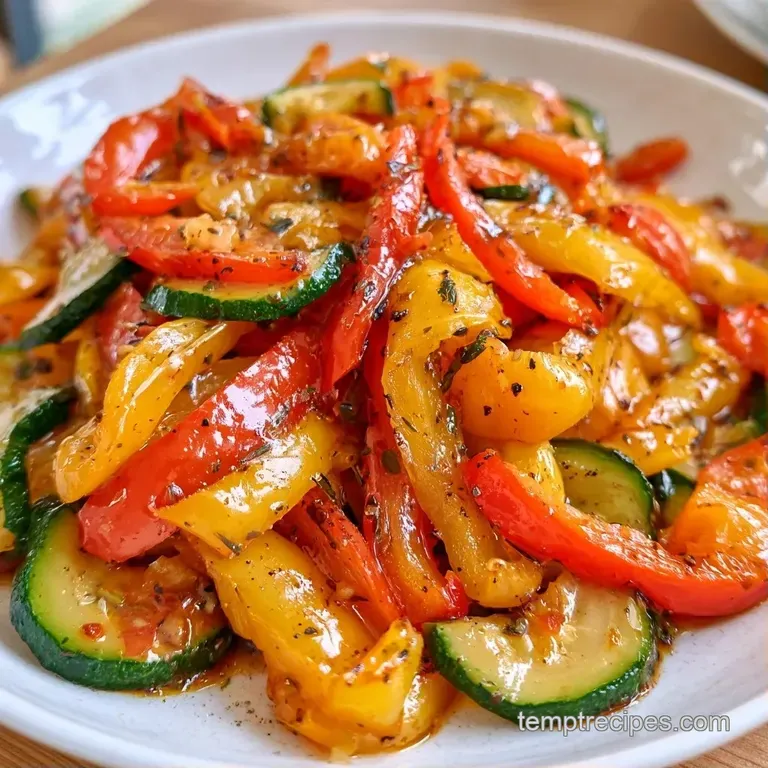
- Clean all the vegetables well. Slice the zucchini into even rounds, chop the peppers into bite sized pieces, and cut the onion into thin half moons.
- Heat 1 tbsp of olive oil in a 12 inch skillet over medium high heat.
- When the oil shimmers, add the sliced onions and peppers.
- Sauté for 4–5 minutes until edges are mahogany colored and the onions become translucent.
- Push the peppers and onions toward the sides of the pan.
- Pour the remaining 1 tbsp of olive oil into the center and sauté the minced garlic for 30 seconds until fragrant.
- Immediately stir in the zucchini.
- Stir fry for 3–5 minutes until zucchini develops golden brown edges while remaining firm.
- Season with salt, black pepper, and dried oregano.
- Toss everything together, take the pan off the heat, and finish with a drizzle of fresh lemon juice and chopped parsley.
Cooking Tip: When working with a very hot pan, keep the zucchini moving. They can go from "perfectly charred" to "burnt" in about 30 seconds.
Fixes for Common Issues
Preventing Watery Vegetables
When the pan is too crowded, the vegetables release steam that can't escape. Instead of searing, they boil in their own juice. If you're doubling the recipe, cook the vegetables in two batches to keep the temperature high.
Stopping Overcooked Zucchini
Zucchini is mostly water and loses its structure quickly. Add them only after the peppers are nearly done. Stop cooking the moment you see brown spots but the center still feels slightly firm.
Avoiding Burnt Garlic
Garlic burns much faster than onions. Always add it toward the end or push other veggies aside to control the heat. Burnt garlic tastes bitter and can ruin the whole pan.
| Problem | Root Cause | Solution |
|---|---|---|
| Veggies are mushy | Pan too crowded | Cook in smaller batches |
| Garlic tastes bitter | Added too early | Add garlic in the last 60 seconds |
| Zucchini is bland | Salted too early | Salt at the very end of cooking |
Adjusting the Batch Size
Scaling Down (Half Batch) Use a smaller 8 or 10 inch skillet. Reduce the cooking time for the peppers by about 20% since there's less mass in the pan. I recommend using a smaller amount of oil, but don't go below 1 tablespoon, or the veggies will stick.
Scaling Up (Double Batch) Do not just double the ingredients in one pan. Work in batches. For the seasoning, only increase salt and oregano to 1.5x first. Taste it before adding the full amount, as spices can concentrate differently in larger volumes.
| Premium Choice | Budget Alternative | Impact | Savings |
|---|---|---|---|
| Extra Virgin Olive Oil | Vegetable Oil | Less fruity flavor | $2-3 per bottle |
| Fresh Parsley | Dried Parsley | Less brightness | $1-2 per bunch |
| Organic Zucchini | Conventional | No taste difference | $0.50 per lb |
Debunking Veggie Myths
"Salt draws out water" Many people say don't salt zucchini until the end because salt draws out water. While true, the high heat of a sauté evaporates that water almost instantly. Salt at the end is more about keeping the texture firm, but a pinch early on doesn't ruin the dish.
"You must peel zucchini" Peeling the zucchini removes most of the nutrients and the structure that keeps the rounds from falling apart. Keep the skin on for a better bite and more color.
"Only olive oil works" Olive oil is great for flavor, but any oil with a higher smoke point, like avocado or canola, works just as well for the browning process.
Creative Twists and Swaps
This makes a wonderful base if you're looking for a complete meal. Stir in some pre-cooked chickpeas to boost the protein, or serve it with my Bell Peppers for 4 recipe for a satisfying dinner.
Quick Flavor Shifts: Want more brightness? → stir in 1 tsp lemon zest Need more kick? → add 1/2 tsp red pepper flakes along with the garlic Craving cheese? → garnish with 2 tbsp parmesan right before serving
Keeping It Fresh
You can store these in a sealed container in the refrigerator for about 3 days. They're actually quite good cold in a pasta salad. For the best taste, I don't recommend freezing them. Zucchini has such high water content that it becomes spongy and watery once thawed.
Zero Waste Tip: Don't toss the bell pepper stems or onion skins. I keep a bag in the freezer for these scraps. Once the bag is full, I simmer them with water and a bay leaf to make a quick veggie stock. If you have leftover sautéed veggies, they make a great base for a Pasta Sauce for 4 recipe or a quick frittata.
Serving Your Plate
To keep the colors popping, serve these immediately. If they sit too long in the pan, the carryover heat will continue to cook the zucchini, and you'll lose that snap.
For a simple presentation, pile them high in a shallow bowl. Garnish with extra parsley and a thin slice of fresh lemon on the side. This makes the Sauteed Bell Peppers and Zucchini look like they came from a bistro rather than a 10 minute weeknight scramble.
According to USDA guidance, leftovers should be reheated to an internal temperature of 165°F to ensure safety. Use a skillet on medium heat for 2-3 minutes to bring back the sear.
Recipe FAQs
What takes longer to cook, bell peppers or zucchini?
Bell peppers take longer to soften and brown. Add them to the pan first to ensure they develop mahogany edges before the zucchini is added.
How to saute zucchini so it's not soggy?
Use medium high heat and avoid crowding the skillet. This allows moisture to evaporate quickly so the zucchini browns instead of stewing.
Why is high heat necessary for the peppers?
High heat creates the mahogany char that defines this dish. It evaporates water instantly to prevent the vegetables from steaming in their own juices.
Do zucchini and bell peppers taste good together?
These vegetables pair perfectly together. If you love this combination, you might also enjoy our bell pepper stir fry for a similar flavor profile.
Could these be made in the oven?
Yes, you can use a baking sheet if you prefer the oven. While the skillet version is faster, roasting produces a deeper caramelization.
Should I include onions in this recipe?
Onions add a necessary sweetness and depth to the dish. Slice them into thin half moons and sauté them with the peppers for 4-5 minutes.
Is it true that I should add all the vegetables to the pan at once for the best flavor?
False. Adding everything at once causes the zucchini to overcook and become mushy before the peppers are tender.
Sauteed Bell Peppers And Zucchini