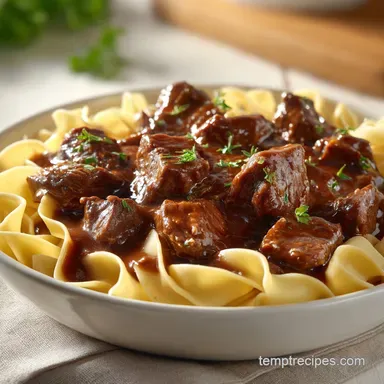
Beef and Noodles: Easy Crockpot Recipe
- Time:15 minutes active + 8 hours cooking = Total 8 hours 15 mins
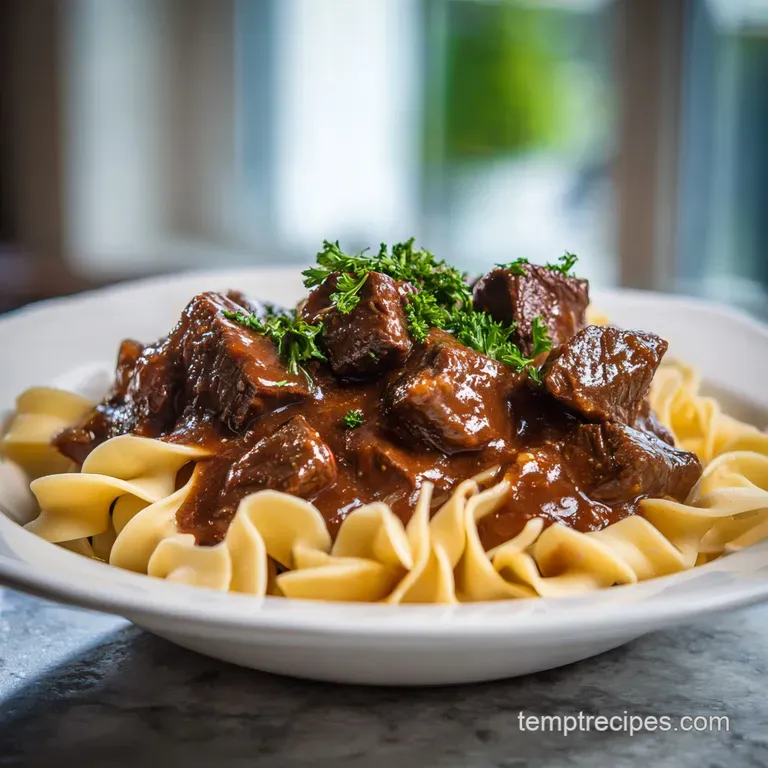
- Flavor/Texture Hook: Hearty, mahogany gravy with tender, pull apart beef
- Perfect for: Cold weeknights, meal prep for the family, or beginner cooks
- Hearty Beef and Noodles for Busy Nights
- The Secret to Tender Beef
- Essential Ingredients for This Dish
- Must Have Kitchen Tools
- Step-by-Step Cooking Guide
- Solving Common Cooking Issues
- Troubleshooting Common Issues
- Ways to Change the Flavor
- Adjusting the Batch Size
- Common Beliefs Debunked
- Freshness and Storage Tips
- Best Sides for This Meal
- High in Sodium
- Recipe FAQs
- 📝 Recipe Card
That heavy, savory scent of slow cooked beef filling every corner of the house is basically a hug in aroma form. I remember the first time I tried making this; I was convinced I had to spend an hour searing every single cube of meat in a scorching pan to get any real flavor.
I spent way too much time hovering over the stove, worrying about the oil temperature, only to realize later that the slow cooker does all that heavy lifting for you.
Honestly, forget the myth that you need a professional sear to get a deep taste. When you let the meat simmer in a rich broth for hours, the flavors meld in a way that searing just can't replicate. This Beef and Noodles approach is all about patience and letting the heat do the work.
You can expect a dish that's thick, comforting, and doesn't break the bank. We're using a budget friendly cut of beef and turning it into something that feels like a Sunday feast. It's satisfying, hearty, and honestly, the kind of meal that makes you want to put on your favorite sweatpants and forget the rest of the world.
Hearty Beef and Noodles for Busy Nights
The real magic here is how the connective tissue in the beef transforms. If you've ever had beef that felt like chewing on a rubber band, it's because the collagen didn't have enough time to break down. By keeping the heat low and the time long, we turn that toughness into a silky, rich sauce.
But what about the noodles? A huge mistake people make is throwing the pasta right into the slow cooker at the start. If you do that, you'll end up with a mushy, starchy paste. We're keeping the noodles separate until the very end to ensure they keep their shape and a bit of that bite.
Whether you're making a crockpot beef and noodles recipe for the first time or you've made this a hundred times, the key is the finish. Adding that touch of heavy cream at the end transforms a standard brown gravy into something truly velvety. It's a simple trick, but it changes the whole vibe of the meal.
The Secret to Tender Beef
The physics of this dish isn't complicated, but it's specific. We aren't trying to "cook" the meat in the traditional sense; we're braising it.
- Collagen Breakdown
- Low heat over 8 hours converts tough collagen into gelatin, which gives the beef its melt in-your mouth feel.
- Umami Layering
- The combination of beef broth and Worcestershire sauce builds a deep, savory base that mimics a long simmered stock.
- Starch Thickening
- A cornstarch slurry creates a glossy finish without making the sauce feel heavy or floury.
- Fat Integration
- Adding butter to the noodles prevents them from clumping and adds a layer of richness that carries the gravy.
Right then, let's look at how this compares to other ways of making it. Most people wonder if they should just use a pot on the stove.
| Method | Time | Texture | Best For |
|---|---|---|---|
| Slow Cooker | 8 hours | Velvety, pull apart | Set and forget days |
| Dutch Oven | 3 hours | Richer, more concentrated | When you have a free afternoon |
| Pressure Cooker | 1 hour | Tender but less "deep" | Last minute cravings |
If you're looking for something a bit lighter, you might enjoy a Mediterranean Beef Bowl, but for pure comfort, the slow cooker is king.
Essential Ingredients for This Dish
Before we dive in, let's look at why these specific components matter. Not all beef is created equal, and choosing the wrong cut can ruin the whole experience.
| Ingredient | Science Role | Pro Secret |
|---|---|---|
| Beef Chuck | Connective Tissue | Look for heavy marbling; it's where the flavor lives. |
| Beef Broth | Solvent/Base | Use low sodium so you can control the salt levels. |
| Cornstarch | Thickener | Always mix with cold water first to avoid clumps. |
| Heavy Cream | Emulsifier | Stir in at the very end to keep the sauce from splitting. |
For the best results, I highly recommend using a chuck roast. According to Serious Eats, the high amount of connective tissue in chuck makes it the ideal choice for long, slow cooking methods.
Component List & Swaps
- 3 lbs beef chuck roast, cut into 1 inch cubes Why this? Best balance of fat and collagen for braising
- Substitute: Stew meat (works, but often leaner and can be tougher)
- 4 cups low sodium beef broth Why this? Provides the liquid base without oversalting
- Substitute: Chicken broth (milder taste, but still works)
- 2 tbsp Worcestershire sauce Why this? Adds an acidic, salty, umami punch
- Substitute: Soy sauce (similar saltiness, slightly different profile)
- 1 cup yellow onion, diced Why this? Adds a subtle sweetness as it breaks down
- Substitute: White onion or shallots (shallots are more refined)
- 3 cloves garlic, minced Why this? Essential aromatic base
- Substitute: 1 tsp garlic powder (less punchy, but convenient)
- 1 tsp dried thyme Why this? Earthy note that cuts through the richness
- Substitute: Dried rosemary or oregano
- 1 tsp salt Why this? Enhances all other flavors
- ½ tsp black pepper Why this? Adds a mild, woody heat
- 3 tbsp cornstarch Why this? Creates a glossy, thick gravy
- Substitute: Flour (results in a matte, heavier sauce)
- 3 tbsp cold water Why this? Dissolves cornstarch without lumps
- ½ cup heavy cream Why this? Creates a velvety, rich finish
- Substitute: Full fat Greek yogurt (tangier, slightly thicker)
- 12 oz wide egg noodles Why this? Holds onto the sauce better than thin noodles
- Substitute: Rotini or Penne (different texture, still satisfying)
- 2 tbsp unsalted butter Why this? Keeps noodles from sticking
- Substitute: Olive oil (less flavor, but works)
Must Have Kitchen Tools
You don't need a fancy kitchen to pull this off, but a few things make it much easier. I use a standard 6 quart slow cooker, but anything similar will do.
- Slow Cooker (Crockpot)
- Large pot for boiling noodles
- Colander for draining pasta
- Whisk or fork for the slurry
- Tongs for moving the beef
Chef's Tip: If you want an even deeper color on your gravy, try grating a small piece of cold butter into the sauce right before serving. It adds a professional sheen that makes the dish look like it came from a restaurant.
Step-by-step Cooking Guide
Let's crack on. Follow these steps exactly, and you'll avoid the common pitfalls of soggy pasta or tough meat.
- Place the cubed beef, diced onion, minced garlic, thyme, salt, and pepper into the slow cooker. Note: Don't worry about stirring too much; just get them in there.
- Pour in the beef broth and Worcestershire sauce, stirring gently to combine.
- Set the slow cooker to Low for 8 hours (or High for 4 hours) until the beef pulls apart easily with a fork.
- Carefully remove the tender beef to a plate. Note: This prevents the meat from breaking into tiny shreds during the thickening process.
- In a small bowl, whisk together the cornstarch and cold water to create a smooth slurry.
- Stir the slurry into the bubbling liquid in the crockpot. Turn the heat to High for 15–20 minutes until the gravy becomes a glossy, mahogany colored sauce.
- Stir the heavy cream into the gravy for a velvety finish.
- Boil the egg noodles in a separate pot of salted water until al dente.
- Drain the noodles and toss with butter to prevent sticking.
- Fold the noodles and the cooked beef back into the creamy beef and noodles crockpot sauce. Stir gently until coated.
Solving Common Cooking Issues
Even the best of us hit a snag. Usually, it comes down to the liquid ratio or the timing of the noodles.
Troubleshooting Common Issues
| Issue | Solution |
|---|---|
| Why Your Gravy is Too Thin | If your sauce is more like a soup than a gravy, it's usually because the cornstarch wasn't given enough heat to activate. Cornstarch needs to reach a near boil to thicken. If it's still thin, just lea |
| Why Your Beef is Still Tough | Tough beef in a slow cooker is almost always a timing issue. Some cuts of beef go through a "tough phase" before they finally break down. If the meat isn't tender at 8 hours, give it another hour. It' |
| Why Your Noodles are Mushy | This happens when noodles are overcooked in the pot or left in the sauce for too long. Always cook them slightly underdone (al dente) because they will continue to soften once they hit that hot grav |
The "Don't Do This" Checklist:
- ✓ Don't add noodles to the slow cooker for 8 hours.
- ✓ Don't use lean beef like sirloin; it will dry out.
- ✓ Don't skip the cold water for the cornstarch slurry.
- ✓ Don't boil the heavy cream for long periods or it may curdle.
- ✓ Don't forget to salt your pasta water generously.
Ways to Change the Flavor
Once you've mastered the basic Beef and Noodles, you can start playing with the profile. This is where you can make the dish your own.
The Mushroom & Garlic Twist
Sauté 8 oz of sliced cremini mushrooms in a pan with a bit of butter before adding them to the slow cooker. This adds a woody, earthy depth that pairs beautifully with the beef. It's almost like a beef stroganoff.
The Red Wine Braise
Replace one cup of the beef broth with a dry red wine, like Cabernet or Merlot. The acidity of the wine cuts through the richness of the cream and gives the gravy a more sophisticated, dark color.
The dairy-free Swap
If you're avoiding cream, you can use full fat coconut milk. It provides the same velvety texture, though it does add a slight tropical note. Alternatively, just omit the cream and rely on the cornstarch slurry for thickness.
The gluten-free Alternative
Swap the egg noodles for gluten-free rotini or even wide rice noodles. Use a cornstarch slurry (which is naturally gluten-free) and make sure your beef broth is certified GF.
If you're in the mood for something with a similar creaminess but a different vibe, my Millionaire Gnocchi is a great alternative for a fancy night in.
Adjusting the Batch Size
Sometimes you're just cooking for yourself, and other times you've got a house full of people. Scaling a slow cooker recipe requires a bit of thought.
Cooking for Two (Half Batch): If you're cutting this in half, use a smaller slow cooker if you have one. If using the same large pot, reduce the cooking time by about 20% because the liquid will heat through faster. Be careful with the cornstarch; start with 1.5 tbsp and add more only if needed.
Feeding a Crowd (Double Batch): When doubling, don't simply double the salt and spices. Start with 1.5x the amount of salt and thyme, then taste and adjust at the end. You'll likely need to work in batches when boiling the noodles to avoid crowding the pot, which leads to uneven cooking.
Baking Note: If you decide to turn this into a casserole by topping it with cheese and baking it in the oven, lower your oven temp to 325°F (160°C) and bake for about 20 minutes.
This prevents the cream sauce from breaking while the cheese melts.
Common Beliefs Debunked
There are a few things people always tell you about this dish that just aren't true.
Myth: Searing seals in the juices. This is the biggest lie in the kitchen. Searing creates flavor on the outside, but it doesn't stop moisture from leaving the meat. The tenderness comes from the slow breakdown of collagen, not the sear.
Myth: Leaner meat is healthier and tastes better. In a slow cooker, lean meat is your enemy. Without the fat and connective tissue of a chuck roast, the beef will become dry and stringy. Embrace the fat; it's what makes the gravy velvety.
Myth: You must use "stew meat" packages. Pre cut stew meat is often a mix of different scraps from the cow, some of which are lean and some of which are fatty. Buying a whole chuck roast and cutting it yourself ensures every piece of beef behaves the same way in the pot.
Freshness and Storage Tips
This is one of those rare meals that actually tastes better the next day. The flavors have more time to settle and penetrate the meat.
Fridge Storage: Store leftovers in an airtight container for up to 4 days. The noodles will absorb some of the sauce as they sit, so it might look thicker when you open the container.
Freezing Guide: You can freeze the beef and gravy for up to 3 months. However, I don't recommend freezing the noodles. They often lose their texture and become grainy. Instead, freeze the meat and sauce, then boil a fresh batch of noodles when you're ready to eat.
Reheating: The best way to reheat is on the stovetop over medium low heat. Add a splash of beef broth or water to loosen the sauce back up to that velvety consistency.
Zero Waste Tips: Don't throw away the beef trimmings from your roast! Toss them in a freezer bag and, once you have a few, simmer them with a carrot and an onion to make your own homemade beef stock. Also, any leftover gravy makes a killer base for a pot roast or a thickener for a vegetable stew.
Best Sides for This Meal
Since Beef and Noodles is so rich and filling, you want sides that provide a bit of contrast something bright, acidic, or crisp to cut through the cream.
Green Vegetables: Steamed broccoli or sautéed snap peas are a great choice. The slight bitterness of the greens balances the richness of the mahogany gravy.
Fresh Salads: A simple arugula salad with a lemon vinaigrette is the way to go. The acidity from the lemon cleanses the palate between bites of the hearty beef.
Bread Options: If you're feeling truly indulgent, a piece of crusty sourdough or a toasted garlic baguette is perfect for mopping up every last drop of sauce.
Serving Style: I like to bowl this up and garnish it with a handful of fresh chopped parsley. It doesn't just look better; the fresh herbs add a pop of brightness that keeps the dish from feeling too heavy. Trust me on this the parsley makes a difference.
High in Sodium
840 mg 840 mg of sodium per serving (37% 37% of daily value)
The American Heart Association recommends a sodium limit of 2,300mg per day, with an ideal limit of 1,500mg for most adults to reduce the risk of cardiovascular disease.
Tips to Reduce Sodium
-
Use No-Salt Added Broth-30%
Replace the low-sodium beef broth with a no-salt added beef broth to eliminate a significant source of hidden sodium.
-
Eliminate Added Salt-25%
Remove the 1 tsp of salt from the recipe; the broth and Worcestershire sauce provide enough seasoning on their own.
-
Reduce Worcestershire Sauce-20%
Cut the Worcestershire sauce in half or substitute it with a splash of balsamic vinegar and a pinch of smoked paprika for a similar depth of flavor.
-
Switch to Low-Sodium Noodles-10%
Check the labels of your wide egg noodles and select a brand with the lowest sodium content per serving.
-
Boost Flavor with Aromatics
Increase the minced garlic or add fresh parsley and rosemary at the end of cooking to enhance taste without adding salt.
Recipe FAQs
What is the best beef to use for beef and noodles?
Beef chuck roast is the best choice. Its high fat content ensures the meat stays tender and juicy during the 8-hour slow cooking process.
Can I put uncooked pasta in my crockpot?
No, boil them separately. Cooking noodles in the slow cooker often results in a mushy, gummy texture.
Is it okay to put raw beef in a slow cooker?
Yes, it is perfectly safe. Just ensure the beef is cubed into 1 inch pieces to cook evenly. If you enjoy slow cooking beef, see how we handle a similar cut in our beef birria.
How to prevent the noodles from sticking together?
Toss the drained noodles with butter. This creates a thin barrier that keeps the pasta separate before you fold it into the beef.
Why is my gravy too thin?
The cornstarch slurry likely didn't reach a near boil. Set the heat to High for 15 20 minutes to properly activate the thickening agent.
Why is my beef still tough after 8 hours?
Continue cooking for another hour. Some cuts of beef go through a "tough phase" before the connective tissue fully breaks down.
How to thicken the sauce in this recipe?
Whisk cornstarch and cold water into a slurry. Stir this mixture into the bubbling liquid and heat on High for 15 20 minutes.
Easy Beef And Noodles