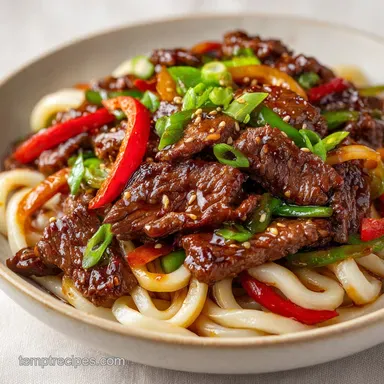
Black Pepper Beef Udon: Savory and Bold
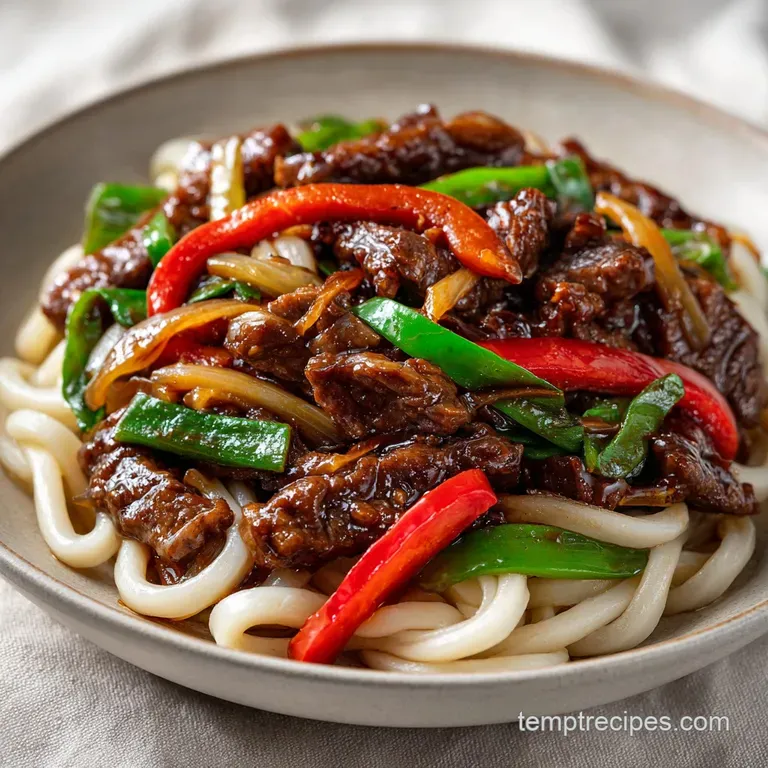
- Time: 10 min active + 10 min cook = Total 20 mins
- Flavor/Texture Hook: Chewy, bouncy noodles with a velvety, peppery beef glaze
- Perfect for: Stress free weeknight dinner when you want takeout vibes at home
- Black Pepper Beef Udon
- Nailing the Technique
- The Building Blocks
- Required Kitchen Tools
- Essential Ingredients
- Cooking Steps
- Fixing Common Issues
- Troubleshooting Common Issues
- Adjusting the Batch
- Truth About Stir Fry
- Storage and Freshness
- Plating for Impact
- Critical Sodium Level
- Recipe FAQs
- 📝 Recipe Card
Black Pepper Beef Udon
The first thing you'll notice is that aggressive, spicy aroma of black pepper hitting a scorching hot pan. It's that sharp, pungent scent that immediately makes your mouth water. I remember the first time I tried making this at home, I thought I needed a commercial grade wok and a blowtorch to get that restaurant style sear.
I spent way too much money on gear I didn't need, thinking the secret was in the equipment.
But here is the truth: you don't need a specialized wok to make a killer black pepper beef udon. I found out the hard way that a heavy skillet works just as well, as long as you don't crowd the pan. The real trick is in how you prep the meat and the timing of the sauce. This recipe is all about speed and heat, turning a handful of pantry staples into something that feels like a feast.
You can expect a dish that balances the saltiness of oyster sauce with a bold, biting pepper heat. The noodles stay bouncy and chewy, while the beef stays tender and juicy. It is a satisfying, comfort heavy meal that comes together in the time it takes to order delivery.
Nailing the Technique
Right then, let's talk about what's actually happening in the pan. To get this right, you need to understand how the ingredients behave under high heat.
- The Meat Barrier: Mixing cornstarch and oil with the beef creates a thin layer that protects the protein from the intense heat, keeping the inside juicy.
- Color Depth: Dark soy sauce doesn't add much salt, but it provides that rich, mahogany hue that makes the dish look professional.
- Starch Thickening: The cornstarch in the sauce hydrates and swells as it heats up, turning a watery liquid into a glossy glaze that clings to every noodle.
- Pepper Activation: Toasting the ground pepper in the oil briefly before the sauce hits helps release the aromatic oils, making the heat feel more integrated.
| Method | Time | Texture | Best For |
|---|---|---|---|
| Fast (This Recipe) | 20 mins | Glossy & Bouncy | Weeknights |
| Classic (Slow) | 60 mins | Deeply Braised | Sunday Lunch |
| Stir fry (No Udon) | 15 mins | Crispy & Light | Low Carb |
The Building Blocks
When you're putting together a black pepper beef udon, the quality of your beef slice makes or breaks the experience. I always recommend sirloin or flank steak. The key is slicing against the grain - look for the lines of muscle fiber and cut perpendicular to them.
This shortens the fibers, so the meat doesn't feel like rubber when you chew it.
If you've never heard of "velveting," it's a staple technique in Chinese cooking. According to Serious Eats, this process involves coating meat in a mixture of cornstarch and liquid to ensure it stays tender. It's a total game changer for home cooks because it prevents that "grey, boiled" look and gives you a velvety texture instead.
For the noodles, frozen udon is actually my preference over the vacuum sealed fresh ones. Frozen udon is usually flash frozen after being steamed, which preserves that signature bounce. Just a quick rinse under warm water and they're ready to go.
| Ingredient | Role | Pro Secret |
|---|---|---|
| Sirloin Steak | Main Protein | Slice while partially frozen for paper thin strips |
| Oyster Sauce | Umami Base | Use a premium brand for a thicker, saltier punch |
| Dark Soy Sauce | Visual Appeal | Use sparingly; it's mainly for the deep brown color |
| Cornstarch | Texture Agent | Always whisk into cold liquid first to avoid lumps |
Required Kitchen Tools
You don't need a fancy arsenal for this, but a few things make it easier. A wide skillet or a wok is best because you need surface area. If you use a small pan, the beef will steam in its own juices rather than searing, and you'll lose that mahogany crust.
A good whisk or a fork is essential for the sauce to make sure the sugar and cornstarch are fully dissolved. If you leave clumps of starch in the sauce, you'll get weird, gelatinous pockets in your noodles.
Essential Ingredients
Here is everything you need. Keep your prep organized - once the oil is hot, things move fast.
For the Beef Marinade 1 lb sirloin or flank steak, thinly sliced against the grain Why this? Lean but flavorful, holds up to high heat 1 tbsp soy sauce Why this? Basic seasoning and salt 1 tsp cornstarch Why this?
Essential for the velveting effect 1 tsp vegetable oil Why this? Stops the meat from sticking to the panSubstitute: Avocado oil (similar smoke point).
For the Black Pepper Sauce 2 tbsp oyster sauce Why this? Adds deep, savory umami 1 tbsp dark soy sauce Why this? Gives the dish its signature dark color 1 tbsp coarsely ground black pepper Why this? The star flavor;
Coarse is better than fine 1 tsp granulated sugar Why this? Balances the salt and heat 1/4 cup water Why this? Provides the volume for the sauce 1 tsp cornstarch Why this? Thickens the sauce into a glaze
Substitute: Hoisin sauce for the oyster sauce (adds sweetness, less salty).
For the Stir Fry 1 lb frozen or fresh udon noodles Why this? Chewy texture that absorbs sauce 1 medium yellow onion, sliced Why this? Adds sweetness and crunch 2 cups choy sum or bok choy, chopped Why this? Fresh
Bitterness to cut through the rich beef 2 tbsp vegetable oil Why this? High smoke point for searing 2 cloves garlic, minced Why this? Essential aromatic baseSubstitute: Napa cabbage for choy sum (milder flavor).
Cooking Steps
Let's get into the flow. I like to think of this in three stages: the prep, the sear, and the gloss.
The Prep Flow 1. Slice the beef thinly. In a bowl, toss the beef with 1 tbsp soy sauce, 1 tsp cornstarch, and 1 tsp vegetable oil to velvet the meat. Note: Let this sit for 5-10 mins if you have time. 2.
Whisk together the oyster sauce, dark soy sauce, coarsely ground black pepper, sugar, water, and 1 tsp cornstarch in a small bowl until dissolved. 3. Rinse udon noodles under warm water to loosen them and set aside. Note: Don't over soak them or they'll get mushy.
The Cooking Flow 4. Heat 1 tbsp of vegetable oil in a wok over high heat. Add the marinated beef in a single layer and sear for 1-2 minutes per side until a mahogany crust forms. Remove beef and set aside. 5. Add the remaining vegetable oil to the pan.
Sauté sliced onions until translucent, then stir in minced garlic and cook for 30 seconds. 6. Add udon noodles and choy sum to the pan and stir fry for 2 minutes until the greens wilt. 7. Pour in the black pepper sauce and return the cooked beef to the pan.
Toss on high heat for 60-90 seconds until the sauce thickens into a glossy glaze.
The Finish 8. Turn off the heat immediately once the sauce coats the noodles. If you cook it too long, the sauce will disappear and the noodles will dry out.
Chef's Note: If your pan isn't screaming hot when the beef hits, you'll get grey meat. Wait for the oil to shimmer or just barely smoke before adding the beef.
Fixing Common Issues
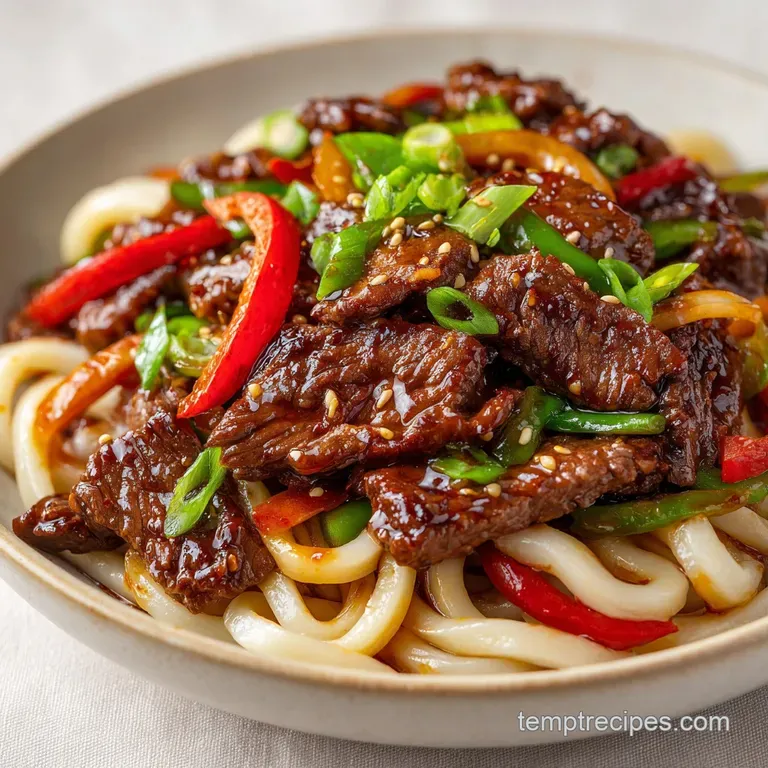
Even the best of us have those days where the sauce is too salty or the noodles are a clumped mess. Most of these issues come down to heat management.
Troubleshooting Common Issues
| Issue | Solution |
|---|---|
| Why Your Beef Is Tough | If the beef feels chewy, it's usually because it was sliced with the grain or overcooked. Sirloin can toughen up quickly if it stays in the pan too long. Sear it fast, take it out, and only bring it b |
| Why Your Noodles Are Mushy | This happens when you over rinse frozen noodles or overcook them in the sauce. Udon is already pre cooked; you're just heating it through and adding flavor. |
| Why Your Sauce Is Watery | If the sauce doesn't thicken, you might not have whisked the cornstarch well enough, or the pan wasn't hot enough to activate the starch. |
Common Mistakes Checklist
- ✓ Sliced beef against the grain for tenderness
- ✓ Whisked cornstarch into cold sauce to avoid lumps
- ✓ Searing beef in batches to avoid crowding the pan
- ✓ Rinsing frozen udon only until loosened
- ✓ Adding greens at the end to keep them vibrant
Adjusting the Batch
If you're cooking for a crowd or just for yourself, you can't always just multiply everything. Stir frying depends heavily on the surface area of your pan.
Scaling Down (1-2 servings) Use half of all ingredients. Be careful with the garlic - use 1 large clove instead of 2 to avoid it becoming too pungent. Reduce the searing time by about 20% because the smaller amount of meat will heat through faster.
Scaling Up (8+ servings) I strongly suggest working in batches. If you put 2 lbs of beef in one pan, you'll end up with a beef stew instead of a stir fry. Cook the beef in two rounds, remove it, then do the vegetables in two rounds. Only combine everything at the end.
For the sauce, scale liquids to 1.5x and salt/spices to 1.5x initially, then taste and add more if needed.
If you're planning a bigger meal, you might want to pair this with a side. My one pot mushroom rice is a great option that adds a different kind of earthiness to the table.
Truth About Stir Fry
There are a few things people tell you about Asian cooking that just aren't true for the home kitchen.
Myth 1: You must have a wok A wok is great, but any heavy bottomed stainless steel or cast iron skillet will do. The "wok hei" (breath of the wok) is hard to achieve at home without a commercial burner, but you can get a similar result by searing meat in batches and using high heat.
Myth 2: Searing seals in juices Searing doesn't "seal" the meat. It creates a crust through a chemical reaction that adds flavor and color. The juiciness comes from the velveting process and not overcooking the protein.
Myth 3: You need to marinate for hours For a black pepper beef udon, a long marinade can actually break down the meat too much, making it mushy. 10 minutes of velveting is all you need for that silky texture.
Storage and Freshness
This dish is best eaten immediately, but we've all had leftovers. The tricky part is that udon noodles love to soak up liquid, so the sauce will be gone by the next morning.
Fridge Storage Keep it in an airtight container for up to 3 days. When you reheat it, add a tablespoon of water or a splash of soy sauce to loosen the noodles and bring back the gloss.
Freezing I don't recommend freezing this. The udon noodles change texture and become grainy, and the choy sum will turn into mush. If you must, freeze only the cooked beef and sauce, then add fresh noodles and veg upon reheating.
Zero Waste Tips Don't toss those onion ends or garlic skins. I keep a bag in the freezer for veggie scraps. Once the bag is full, I boil them with water and peppercorns to make a basic vegetable stock.
Also, if you have leftover choy sum stems, slice them thinly and add them to an omelet the next morning.
Plating for Impact
To make this look like it came from a high end bistro, don't just dump it in a bowl. Use wide, shallow bowls so the noodles can spread out, showing off the glossy sauce.
Pile the noodles high in the center and arrange the beef and choy sum on top. I like to finish the dish with a sprinkle of fresh scallions or toasted sesame seeds for a pop of color. If you want more heat, add a few slices of fresh red chili on top.
If you find this a bit too heavy for a Tuesday night, you might prefer something like my Mediterranean beef bowl, which uses a fresh yogurt sauce instead of a heavy glaze. But for those nights when you just need a hug in a bowl, this pepper beef udon is the way to go.
Right then, you've got the plan. Just remember: high heat, don't crowd the pan, and keep those noodles bouncy. Let's crack on and get cooking!
Critical Sodium Level
1365 mg 1365 mg of sodium per serving (59% 59% of daily value)
The American Heart Association recommends a daily limit of no more than 2,300 mg of sodium to maintain heart health and reduce the risk of hypertension.
Ways to Lower Sodium in This Recipe
-
Swap for Low-Sodium Soy-20%
Replace both the soy sauce and dark soy sauce with low-sodium alternatives or coconut aminos to significantly cut salt intake.
-
Reduce Oyster Sauce-20%
Use half the amount of oyster sauce and add a pinch of mushroom powder or a splash of balsamic vinegar to maintain the umami depth.
-
Choose Plain Udon-20%
Ensure you use fresh, non-pre-seasoned udon noodles, as many frozen varieties come with high sodium brine or flavor packets.
-
Increase Vegetables-10%
Double the amount of choy sum or bok choy to increase the bulk of the meal, effectively diluting the sodium concentration per serving.
-
Boost Fresh Aromatics
Add freshly grated ginger and extra minced garlic to provide a pungent, savory flavor that reduces the need for salty sauces.
Recipe FAQs
How to prevent the beef from becoming tough?
Slice the beef thinly against the grain. Sear quickly for 1-2 minutes per side to prevent the meat from overcooking and toughening.
Do I need to boil the udon noodles before adding them to the pan?
No, rinse them under warm water. These noodles are pre-cooked; boiling them further often leads to a mushy texture.
How to thicken the sauce if it stays watery?
Whisk the cornstarch thoroughly into the liquid ingredients before adding them to the wok. Toss on high heat for 60-90 seconds until the glaze becomes glossy.
Can I freeze the leftovers for later?
No, freezing is not recommended. The udon noodles become grainy and the choy sum loses its structure, turning into mush.
How to reheat the beef udon without it sticking?
Add a tablespoon of water or soy sauce before heating. This loosens the noodles and restores the original glossy consistency of the sauce.
Can I use bok choy instead of choy sum?
Yes, bok choy is an excellent alternative. If you enjoy utilizing fresh greens, see how we balance flavors in our broccoli salad.
Is it true that only sirloin can be used for this recipe?
No, this is a common misconception. Flank steak works just as well as long as you velvet it with soy sauce, cornstarch, and oil.
Black Pepper Beef Udon