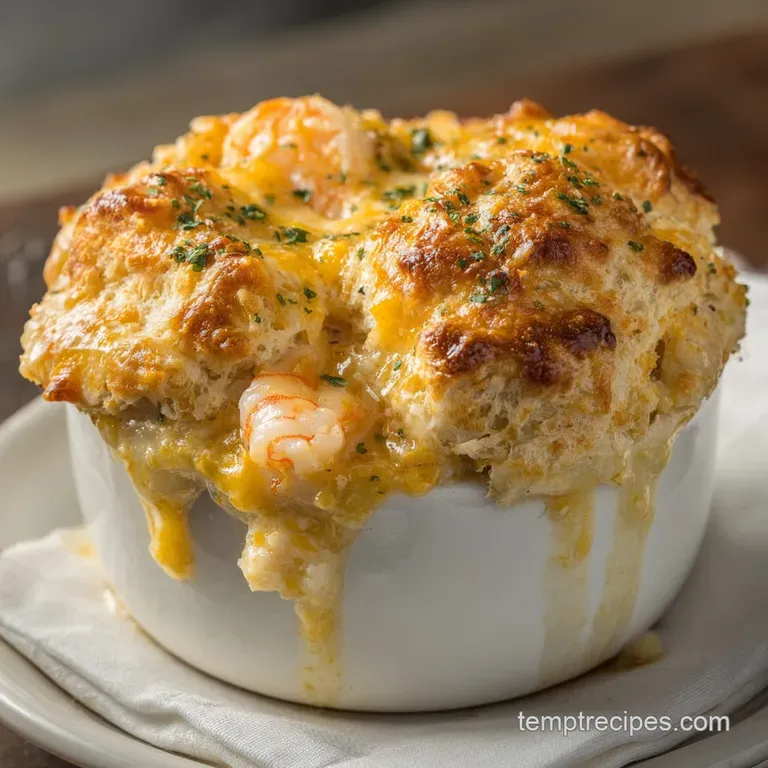
Shrimp and Lobster Pot Pie with Biscuits
- Time: Active 15 minutes, Passive 25 minutes, Total 40 minutes
- Flavor/Texture Hook: Silky seafood gravy topped with shattering, buttery cheddar crust
- Perfect for: Stress free weekend indulgence or a hearty family comfort meal
- The Ultimate Shrimp and Lobster Pot Pie
- Why You'll Crave This Comfort
- The Essential Seafood Pie Metrics
- Selecting Your Premium Seafood Elements
- Kitchen Tools for Success
- Assembling Your Decadent Seafood Pie
- Avoiding Common Seafood Pie Pitfalls
- Creative Seafood Filling Variations
- Storing and Reheating Your Leftovers
- Adjusting for Large Crowds
- Myths About Seafood Baking
- Ideal Sides for Seafood Pie
- Very High in Sodium
- Recipe FAQs
- 📝 Recipe Card
The Ultimate Shrimp and Lobster Pot Pie
The moment that 45g of unsalted butter hits the hot skillet, the whole kitchen transforms. There is a specific, nutty sizzle that happens just before you toss in the diced onion and celery, a sound that promises something truly satisfying is on the way.
Indulge in this Creamy Shrimp and Lobster Cheddar Bay Biscuit Pot Pie, a truly unforgettable seafood comfort food experience.
I remember the first time I tried to make a seafood pie, I made the mistake of overcooking the lobster until it felt like chewing on a rubber band. It was heartbreaking, honestly. But after years of tinkering with temperatures and roux ratios, I've found the secret to keeping that 225g of lobster meat and 340g of shrimp absolutely succulent while the biscuit top turns into a golden, shattering masterpiece.
We're going for a hearty vibe here, something that feels like a big hug from a coastal grandma but without the three hour prep time. We'll use a mix of seafood stock and heavy cream to get that velvety texture that coats the back of a spoon, then top it with a biscuit crust that brings that iconic sharp cheddar punch.
It's a one skillet wonder that feels way more expensive than it actually is.
Why You'll Crave This Comfort
- Fat Emulsified Roux: Combining 45g of butter with 30g of all purpose flour creates a stable base that prevents the heavy cream from breaking under heat.
- Carryover Precision: We only lightly sauté the shrimp and lobster initially, allowing the oven's ambient heat to finish the protein without toughening the fibers.
- Starch Gelatinization: The 250g of biscuit mix uses chemical leaveners that react instantly with the 160ml of whole milk, ensuring a lift that stays airy despite the steam from the filling.
- Aromatic Infusion: Simmering the 0.5 tsp of dried thyme and 1 tsp of Old Bay directly in the 475ml of seafood stock releases fat soluble flavor compounds that permeate every bite.
The Physics of the Velvety Roux
The secret to this texture lies in the flour to fat ratio, where the butter coats the starch granules to prevent clumping. This ensures that when the 475ml of stock hits the pan, the sauce thickens into a silky, cohesive gravy rather than a lumpy mess.
| Thickness | Internal Temp | Rest Time | Visual Cue |
|---|---|---|---|
| 1 inch filling | 165°F | 5 minutes | Gravy bubbles slowly at edges |
| 0.5 inch biscuit | 200°F | 5 minutes | Tops are golden and firm |
| Chopped Lobster | 145°F | 5 minutes | Meat turns opaque and pearly |
Getting that sauce right is the difference between a soggy mess and a satisfying meal. You want to see the 475ml of seafood stock and 240ml of heavy cream transform into a thick, glossy pool that barely hides the 150g of peas and carrots.
If the sauce is too thin, the biscuits will sink; if it's too thick, it won't feel like a true pot pie.
The Essential Seafood Pie Metrics
When we talk about the "science" of a great pie, it's really about how the components play together. The 30g of all purpose flour isn't just a filler, it's the structural engineer of your sauce.
It has to hold up the weight of the seafood and the moisture from the 150g of frozen peas and carrots without turning into paste.
| Ingredient | Science Role | Pro Secret |
|---|---|---|
| Seafood Stock (475ml) | Flavor Base | Use room temp stock to avoid breaking the roux |
| Heavy Cream (240ml) | Emulsifier | Higher fat content prevents curdling with Old Bay |
| Sharp Cheddar (115g) | Structural Flavor | Hand shred to avoid anti clumping starches |
| Biscuit Mix (250g) | Moisture Barrier | Mix until just combined to keep it tender |
The interaction between the 115g of sharp cheddar and the 250g of biscuit mix is what gives us that iconic "Cheddar Bay" vibe. I've found that using 160ml of whole milk instead of water makes the topping much richer, mirroring the decadence of the 225g of lobster tucked underneath.
It's all about layering those hearty elements so every spoonful is balanced.
Selecting Your Premium Seafood Elements
- Lobster Tail (225g): Chopped into 1 inch chunks. Why this? Tails offer the firmest, sweetest meat that holds its shape during baking. (Substitute: Monkfish or extra shrimp)
- Raw Shrimp (340g): Peeled and deveined. Why this? Raw shrimp releases natural juices into the sauce as it bakes. (Substitute: Bay scallops)
- Seafood Stock (475ml): Low sodium preferred. Why this? Provides the deep oceanic backbone without overwhelming the palate with salt. (Substitute: Clam juice diluted with water)
- Sharp Cheddar (115g): Freshly shredded. Why this? Fresh cheese melts into the biscuit dough more seamlessly than bagged shreds. (Substitute: Gruyère for a nuttier finish)
- Heavy Cream (240ml): Full fat. Why this? Essential for that velvety mouthfeel and stabilizing the sauce. (Substitute: Full fat coconut milk for a dairy-free twist)
- Old Bay Seasoning (1 tsp): The classic blend. Why this? The celery salt and paprika notes are the soul of coastal cooking. (Substitute: Cajun seasoning)
Kitchen Tools for Success
You don't need a professional kitchen, but a large cast iron skillet (like a Lodge 12 inch) is my absolute go to for this. It holds heat like a champ, which means your 45g of butter won't drop in temperature when you add the cold 340g of shrimp.
A heavy bottomed stainless steel pan works too, but you might need to watch the heat more closely to avoid scorching the 240ml of heavy cream.
You'll also want a solid whisk for integrating that 30g of flour. Trust me, a fork won't cut it here if you want a sauce that's truly silky. For the biscuit topping, a simple mixing bowl and a sturdy spatula are all you need. Don't overwork the dough, or you'll lose that satisfying, flaky texture we're after.
Assembling Your Decadent Seafood Pie
Preparing Seafood and Aromatics
- Melt 45g of butter in your skillet over medium heat until it starts to foam and bubble.
- Add the diced onion and 2 stalks of sliced celery, sautéing until the onions turn translucent and fragrant. Note: This builds our flavor base.
- Stir in 3 cloves of minced garlic and 1 tsp of Old Bay, cooking for 30 seconds until the aroma fills the room.
- Add the 225g of lobster chunks and 340g of shrimp, searing for 1 minute until they just begin to turn pink.
Building the Velvety Sauce
- Sprinkle 30g of flour over the seafood and stir constantly for 1 minute until no white streaks remain.
- Slowly whisk in 475ml of seafood stock and 240ml of heavy cream, simmering until the sauce thickens and coats a spoon. Note: The roux needs heat to activate its thickening power.
- Fold in 150g of frozen peas and carrots along with 0.5 tsp of dried thyme, salt, and pepper.
Creating the Cheddar Bay Crust
- In a separate bowl, whisk 250g of biscuit mix with 115g of shredded cheddar and 160ml of milk until a soft, sticky dough forms.
- Drop spoonfuls of the dough onto the hot seafood filling, leaving small gaps to allow steam to escape during the bake.
Finishing the Golden Bake
- Bake at 400°F (200°C) for 15 minutes until the biscuits are golden brown and the filling is bubbling.
- Brush the tops with 30g of melted butter mixed with garlic powder and parsley until they glisten and shine.
Avoiding Common Seafood Pie Pitfalls
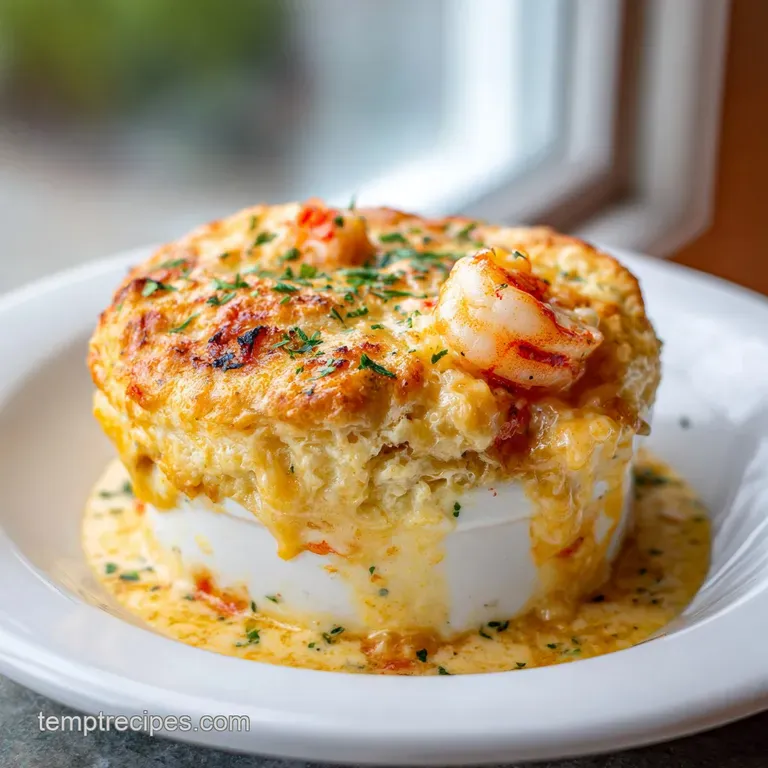
Fixing a Runny Filling
If you pull your pie out and the gravy looks more like soup, it usually means the 30g of flour didn't get enough time to cook with the 475ml of stock before the biscuits went on. The steam from the 150g of peas and carrots can also add extra moisture.
Next time, let the sauce simmer for an extra 2 minutes until it looks slightly thicker than you think it should be.
Avoiding Rubbery Seafood Texture
Lobster and shrimp are delicate. If you cook the 225g of lobster meat all the way through on the stovetop, it will definitely turn tough in the oven. The goal is to just "kiss" the pan with the seafood to get some color, then let the 400°F oven do the heavy lifting.
Think of the stovetop stage as an aromatic bath, not a full sear.
| Problem | Root Cause | Solution |
|---|---|---|
| Biscuits are raw in middle | Dough balls too large | Keep spoonfuls to roughly 2 tablespoons each |
| Sauce tastes bland | Under seasoning stock | Increase Old Bay to 1.5 tsp or add a pinch of salt |
| Seafood is dry | Overcooked on stovetop | Remove skillet from heat immediately after adding stock |
Common Mistakes Checklist
- ✓ Don't skip the celery and onion; they provide the "crunch" that balances the soft seafood.
- ✓ Use cold milk for the biscuits to keep the butter fats from melting too early.
- ✓ Pat the 340g of shrimp dry before adding to the pan to avoid excess water in the sauce.
- ✓ Let the pie rest for 5 minutes after baking to allow the sauce to set.
- ✓ Shred your own cheddar; pre shredded cheese has starch that can make the biscuit topping gritty.
Creative Seafood Filling Variations
If you want to take this up a notch, consider making it a "Seafood Trio" by swapping 100g of the shrimp for fresh bay scallops. They add a buttery sweetness that pairs beautifully with the lobster. For a different vibe, similar to the technique used in our Cheesy Breakfast Potato recipe, you could even add some diced gold potatoes to the filling for extra heartiness.
For those who like a bit of heat, try adding some of my Hot Honey Pickled recipe on the side or stirring a teaspoon of red pepper flakes into the roux. The acidity of the onions cuts right through the richness of the 240ml of heavy cream and the 115g of sharp cheddar. It’s a game changer for anyone who finds creamy dishes a bit too heavy.
Storing and Reheating Your Leftovers
Leftover seafood pie is a rare occurrence in my house, but if you have some, it stays satisfyng in the fridge for up to 3 days. Store it in an airtight container to keep the biscuits from absorbing too much moisture from the sauce.
For longer storage, you can freeze the filling (without the biscuits) for up to 2 months. Just thaw it in the fridge overnight and top with fresh dough before baking.
When it comes to reheating, the microwave is the enemy of the biscuit. It will turn that lovely crust into a soggy sponge. Instead, pop a portion into a toaster oven or the main oven at 350°F (180°C) for about 10 minutes.
This helps the 115g of cheddar in the topping crisp back up while gently warming the 225g of lobster meat without turning it into rubber.
To minimize waste, don't throw away your lobster shells! You can simmer them with some water and a few veggie scraps to make a quick stock that you can use for the next time you make this recipe. It’s a great way to squeeze every bit of value out of those premium ingredients.
Adjusting for Large Crowds
If you’re doubling this for a party, don't just double everything blindly. For the sauce, I recommend using only 1.5x the amount of Old Bay and salt initially, then tasting. Spices can become overwhelming when scaled up linearly.
You'll likely need two large skillets or a massive 13x9 baking dish to ensure the biscuits have enough room to breathe and brown properly.
| Premium | Budget | Flavor Impact | Savings |
|---|---|---|---|
| Fresh Lobster | Canned Lobster | Slightly less firm texture | Save $15-20 |
| Seafood Stock | Chicken Stock | More poultry forward, less briny | Save $2-4 |
| Heavy Cream | Half and Half | Thinner sauce, less decadent | Save $1-2 |
When scaling down for two people, you can follow the same logic as my Sweet Potato Egg recipe and use individual ramekins. It makes for a very cute presentation and ensures everyone gets the perfect ratio of biscuit to filling. Just reduce the baking time by about 5 minutes since the smaller portions will heat through faster.
Myths About Seafood Baking
There’s a common misconception that you need to "seal" the shrimp by searing them at high heat. In reality, seafood doesn't have pores to seal; high heat just causes the proteins to contract and squeeze out moisture.
A gentle sauté in 45g of butter is all you need to develop flavor without sacrificing that satisfying, tender bite.
Another myth is that you can't use frozen seafood for a high end pot pie. Honestly, as long as you thaw the 340g of shrimp and 225g of lobster tail properly and pat them completely dry, the result is almost indistinguishable from fresh.
The key is removing that surface moisture so you're not accidentally steaming your seafood in the skillet before the sauce even begins.
Ideal Sides for Seafood Pie
Since this dish is incredibly rich and hearty, I usually pair it with something bright and acidic. A crisp green salad with a lemon vinaigrette is the classic choice. If you're looking for something more substantial, my Healthy Mediterranean Potato recipe offers a tangy contrast that doesn't feel too heavy alongside the cream based pie.
For drinks, a cold glass of Chardonnay or a crisp Sauvignon Blanc works wonders. The acidity in the wine cuts through the 240ml of heavy cream and the 115g of sharp cheddar, cleaning your palate for the next decadent bite.
If you prefer beer, a light pilsner or a citrusy IPA provides a refreshing bubbles and hops contrast to the Old Bay spices. Regardless of what you serve it with, this is the kind of meal that makes everyone at the table go quiet as they savor that first, perfect bite.

Very High in Sodium
1140 mg mg of sodium per serving (50% of daily value)
American Heart Association recommends limiting sodium intake to about 2,300mg per day.
Tips to Reduce Sodium in Your Lobster and Shrimp Pot Pie
-
Low-Sodium Broth-30%
Replace the regular seafood stock with a low-sodium or no-salt added version. This can significantly reduce the sodium content of the base of the pot pie.
-
Reduce Cheese-15%
Decrease the amount of sharp cheddar cheese used in the biscuit topping by half, or substitute with a low-sodium cheese alternative. This will lessen the overall sodium impact while still contributing flavor.
-
Omit Added Salt-25%
Eliminate the 'salt to taste' and rely on the other seasonings to flavor the dish. Taste the dish after cooking and only add salt if absolutely necessary.
-
DIY Biscuit Mix-10%
Make your own biscuit mix from scratch instead of using a store-bought version. You can control the sodium content and use low-sodium baking powder.
-
Spice it Up!
Experiment with using more herbs and spices to enhance the flavor of your dish, such as smoked paprika, onion powder or fresh herbs. These additions can make the dish flavorful without relying on salt.
Recipe FAQs
What is the main textural goal for the cheddar biscuit topping?
Achieve a shattering, buttery crust. The sharp cheddar melts into the dough, but it must remain airy and crisp on top after baking for contrast against the creamy filling.
How do I prevent the shrimp and lobster from becoming tough?
Sear them only briefly on the stovetop. You should only cook them until they just begin to turn pink, allowing the ambient heat of the 400°F oven to finish the cooking process.
How to thicken the sauce if it seems too runny after baking?
Simmer the roux and stock mixture longer next time. Ensure the 30g of flour is fully cooked with the liquids for at least two minutes until it visibly coats the back of a spoon before adding the seafood.
Is it true that I must use only fresh lobster meat for this pot pie?
No, properly thawed frozen seafood works well. Thaw the 340g of shrimp and 225g of lobster completely, then pat them dry to prevent excess water from thinning the sauce.
How far in advance can the pot pie filling be prepared?
Prepare the filling up to 24 hours ahead of time. Store the cooked sauce and seafood covered in the refrigerator, then top with fresh biscuit dough right before baking.
How to properly incorporate the cheddar cheese into the biscuit topping?
Hand shred the sharp cheddar and fold it in gently. Adding freshly shredded cheese ensures it mixes smoothly into the 250g of biscuit mix without the anti caking starches found in pre-shredded bags.
What is the best alternative liquid to heavy cream for a lighter sauce?
Substitute with full fat coconut milk for a dairy-free option. For a slightly lighter dairy version, you can use half and half, but expect the resulting sauce to be less rich and velvety.
Seafood Pot Pie With Biscuits
Ingredients:
Instructions:
Nutrition Facts:
| Calories | 603 kcal |
|---|---|
| Protein | 29.6 g |
| Fat | 37.1 g |
| Carbs | 36.8 g |
| Fiber | 2.4 g |
| Sugar | 4.8 g |
| Sodium | 1140 mg |
