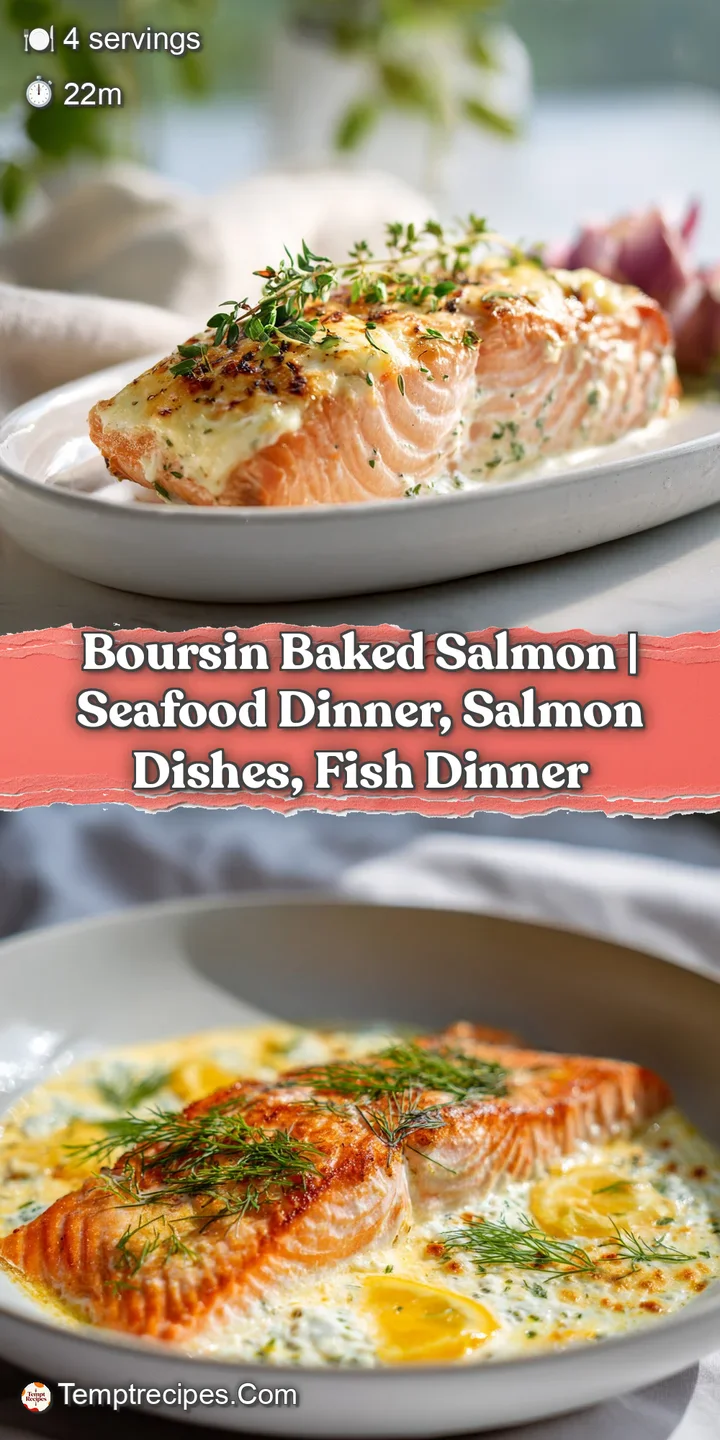
Boursin Baked Salmon: Creamy and Tender
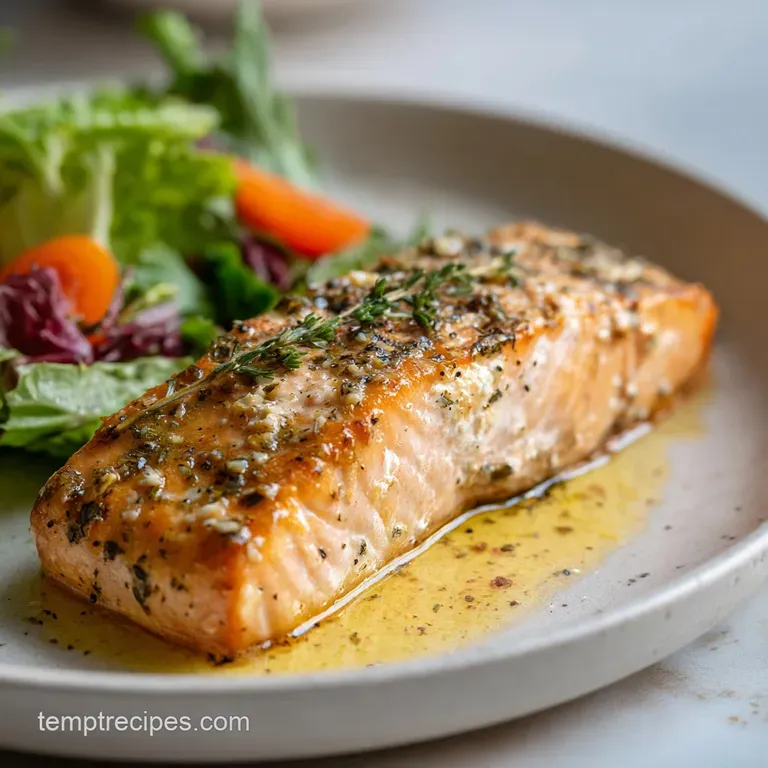
- Time: Active 10 minutes, Passive 12 minutes, Total 22 minutes
- Flavor/Texture Hook: Velvety melted cheese meets flaky, succulent fish and burst tomatoes.
- Perfect for: Busy weeknights where you need a win with zero effort.
- Effortless Boursin Baked Salmon for Busy Weeknight Dinners
- Why This Works So Well
- Essential Numbers for Reliable Kitchen Results
- Component Analysis for a Satisfying Meal
- Tools to Streamline Your Kitchen Flow
- The Step by Step Cooking Process
- Avoiding Mistakes for Stress Free Cooking
- Customizing Your One Pan Dinner Flavors
- Debunking Some Common Kitchen Myths
- Keeping Your Leftovers Fresh and Tasty
- Plating Like a Restaurant Chef Today
- Recipe FAQs
- 📝 Recipe Card
Effortless Boursin Baked Salmon for Busy Weeknight Dinners
Right then, let's talk about the absolute magic of this dish. Picture this: you've had a long day, the fridge is looking a bit sparse, but you have a pack of salmon and that iconic little wheel of herbed cheese.
The moment this hits the oven, the garlic and fine herbs start to mingle with the lemon, creating an aroma that fills the whole house with comfort. I remember the first time I tried this method, I was skeptical that a "cheese blanket" would work for fish, but the way it keeps the salmon so moist is just brilliant.
When you pull the tray out, the cherry tomatoes have blistered and released their sweet juices, mixing with the melted cheese to create a built in sauce. It is satisfying, hearty, and honestly feels like something you'd pay far too much for at a bistro. We are going for maximum flavor with minimum resistance here.
There is no searing, no splashing oil, and no complex reduction sauces to worry about. Just honest, good food that works every single time.
We are going to focus on getting that salmon perfectly flaky while the spinach wilts right into the pan drippings. It's a one pan wonder that has saved my Tuesday nights more times than I can count. You'll love how the smoked paprika adds just a hint of depth to the creaminess.
Let's get stuck into why this specific technique is a total lifesaver for the home cook who values their sanity as much as their dinner.
Why This Works So Well
- Thermal Insulation: The thick layer of Boursin cheese acts as a heat shield, preventing the delicate salmon proteins from tightening up and becoming dry or rubbery.
- Moisture Buffer: Placing the fish on lemon slices creates a barrier between the hot metal pan and the skin, which gently steams the fish from the bottom up.
- Built in Emulsion: As the tomatoes burst, their acidic juice mixes with the melting fats from the cheese, creating a silky sauce right on the tray.
- Aromatic Infusion: The slivered garlic and lemon zest are trapped under the cheese layer, forcing those flavors directly into the flesh of the fish instead of evaporating into the oven air.
| Thickness of Fillet | Internal Temperature | Rest Time | Visual Cue |
|---|---|---|---|
| 1 inch (2.5 cm) | 52-57°C | 3 minutes | Flakes easily with a fork |
| 1.5 inches (3.8 cm) | 52-57°C | 5 minutes | Center is opaque but moist |
| 0.5 inches (1.3 cm) | 52-57°C | 2 minutes | Edges are slightly golden |
Understanding how the heat moves through the tray is the secret to a stress free dinner. By using the lemon slices as a "rack," we ensure the heat isn't too aggressive on the bottom of the fillets, which keeps the texture velvety rather than tough.
Essential Numbers for Reliable Kitchen Results
This section is all about the logistics. We are working with 4 center cut salmon fillets, each weighing about 170g (6 oz). It's important to use center cut pieces because they have a more uniform thickness than the tail ends, which helps everything cook at the same rate.
If you do have a thin tail piece, just fold it under itself to match the thickness of the others.
The cook time is a tight 12 minutes at 200°C (400°F). Don't be tempted to leave it in longer just because the cheese hasn't "browned" Boursin is a soft cheese and won't develop a hard crust like cheddar. We are looking for the salmon to be just cooked through. For a deeper flavor profile, you might want to try adding a side of Mediterranean Chicken Zucchini Bake if you're hosting a larger crowd and need a variety of one pan options.
Component Analysis for a Satisfying Meal
| Ingredient | Science Role | Pro Secret |
|---|---|---|
| Boursin Cheese | Fat/Flavor Carrier | Mash it with lemon juice first to make it easier to spread without tearing the fish. |
| Cherry Tomatoes | Acid Source | Leave them whole; they act as little flavor bombs that pop when you press them with a fork. |
| Smoked Paprika | Color/Depth | Dust it from high up to get an even "sunset" glow across the entire tray. |
| Baby Spinach | Fresh Finish | Add it the very second the pan leaves the oven so it wilts without turning to mush. |
Selecting the right elements makes all the difference for this Boursin Baked Salmon. For the salmon, look for skin on fillets. Even if you don't eat the skin, it acts as another layer of protection against the heat of the pan.
The Garlic & Fine Herbs Boursin is the classic choice here because the heavy lifting of seasoning is already done for you.
- Salmon Fillets: 4 (170g / 6 oz each). Substitute: Steelhead trout works beautifully and has a similar fat content.
- Boursin Cheese: 1 wheel (150g / 5.2 oz). Substitute: Plain cream cheese mixed with 1 tsp dried Italian herbs and a pinch of garlic powder. Why this? The high fat content insulates the fish from overcooking.
- Extra Virgin Olive Oil: 1 tbsp. Substitute: Avocado oil for a more neutral flavor.
- Lemon: 1 large. Substitute: A large orange for a sweeter, floral citrus note. Why this? The slices prevent the fish from sticking to the pan.
- Garlic: 2 cloves. Substitute: 1/2 tsp garlic flakes if you're in a real rush.
- Smoked Paprika: 1 tsp. Substitute: Sweet paprika or a pinch of cayenne if you want heat.
- Cherry Tomatoes: 2 cups. Substitute: Chopped red bell peppers for a similar sweetness.
- Baby Spinach: 3 cups. Substitute: Chopped kale, but you'll need to bake it with the fish for 5 minutes to soften it.
Tools to Streamline Your Kitchen Flow
You really don't need much for this recipe, which is why I love it. A large rimmed baking sheet is the standard choice, but a 9x13 inch (23x33 cm) glass baking dish is actually my favorite. The glass holds heat more evenly and makes for a lovely presentation if you're taking it straight to the table.
You'll also want a small mixing bowl to prep the cheese mixture.
One thing I've learned the hard way is to always use a fork for mashing the cheese. A spoon just makes it stick to the back, but a fork breaks up the curds and incorporates the lemon juice much faster. If you have an instant read thermometer, keep it handy.
It’s the only way to be 100% sure your fish is done without cutting into it and letting all those lovely juices escape.
The step-by-step Cooking Process
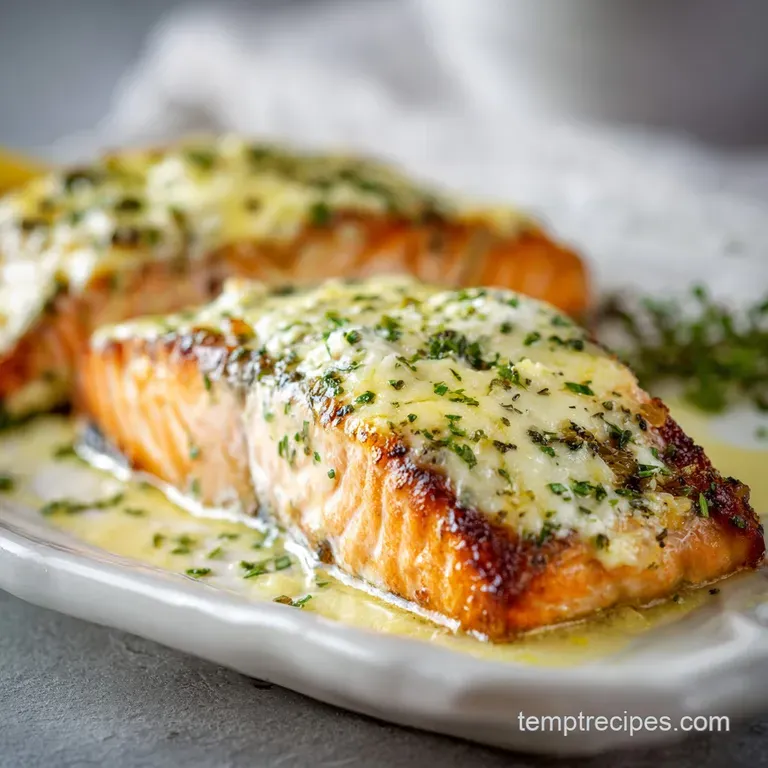
- Preheat your oven to 200°C (400°F). Prepare your baking tray or glass dish. Note: A hot oven is crucial for bursting the tomatoes quickly.
- In your small bowl, mash the Boursin cheese with the lemon zest and a splash of the juice. until it looks like thick cake frosting.
- Lay the lemon slices across the tray. Place one salmon fillet directly on top of each slice.
- Pat the salmon skin and flesh completely dry with a paper towel. Note: Moisture on the surface will make the cheese slide off.
- Spread the Boursin mixture over the top of each fillet, covering the edges well.
- Toss the cherry tomatoes and slivered garlic around the fish on the tray.
- Drizzle the olive oil over the veggies and dust the whole tray with smoked paprika.
- Bake for 12 minutes until the salmon flakes and tomatoes are wrinkled.
- Pull the tray out and immediately scatter the spinach over the hot tomatoes.
- Use tongs to gently toss the spinach into the pan juices until it turns bright green and soft.
Avoiding Mistakes for Stress Free Cooking
Why Your Salmon Is Dry
Even with the cheese, you can overcook fish if the oven is too hot or the fillets are very thin. If the white stuff (albumin) is pouring out of the sides of the fish, it’s a sign the muscle fibers have contracted too tightly.
Next time, pull it out 1 or 2 minutes earlier; the residual heat will finish the job.
| Problem | Root Cause | Solution |
|---|---|---|
| Cheese slides off | Fish was too wet | Pat the salmon very dry with paper towels before spreading. |
| Tomatoes didn't burst | Oven wasn't preheated | Ensure the oven hits 200°C before the tray goes in. |
| Spinach is watery | Too much liquid in pan | Drain excess lemon juice before adding the greens. |
If you find yourself often struggling with timing, you might enjoy my Buffalo Chicken Casserole which is a bit more forgiving with oven time. But for this salmon, the key is the 12 minute mark.
Common Mistakes Checklist
- ✓ Always pat the salmon dry; it’s the difference between the cheese staying put or sliding into a puddle.
- ✓ Don't skip the lemon slices under the fish; they are your insurance policy against sticking.
- ✓ Use slivered garlic, not minced; minced garlic burns too easily in a 200°C oven.
- ✓ Let the fish rest for 3 minutes before serving; this allows the juices to redistribute for a better texture.
- ✓ Ensure your Boursin is at room temperature for 10 minutes before mashing; it makes the spreading much smoother.
Customizing Your One Pan Dinner Flavors
If you want to scale this down for two people, it's very easy. Just use half of everything, but keep the oven temperature the same. Use a smaller baking dish so the tomato juices don't spread out too thin and burn on the tray. When scaling up for a crowd, you'll likely need two baking sheets.
Rotate them halfway through the 12 minutes to ensure even cooking, as the top rack is usually hotter than the bottom.
Chef's Tip: If you want a bit of a crunch, mix 2 tablespoons of panko breadcrumbs into the Boursin before spreading. It adds a lovely "shatter" to every bite that contrasts with the velvety fish.
| Method | Time | Texture | Best For |
|---|---|---|---|
| Oven (200°C) | 12 mins | Flaky & juicy | Most consistent results |
| Air Fryer (190°C) | 8-10 mins | Extra crispy edges | Small batches/quick lunch |
| Stovetop (Pan) | 10 mins | Seared bottom | If you love crispy skin |
Debunking Some Common Kitchen Myths
One big myth is that you must bring salmon to room temperature before cooking. Honestly, with a quick 12 minute bake, taking it straight from the fridge is actually better. It gives the outside (and the cheese) time to develop flavor while the inside stays tender and doesn't overcook.
Another one is that you need to flip the fish. Please don't! Flipping will just result in a mess of melted cheese and broken fillets. The oven's ambient heat handles everything perfectly.
Keeping Your Leftovers Fresh and Tasty
Store any leftovers in an airtight container in the fridge for up to 2 days. When reheating, avoid the microwave if you can, as it turns salmon into a rubber ball. Instead, put it in a cold oven, set it to 150°C, and take it out once it’s just warmed through (about 10 minutes).
For zero waste, those leftover lemon slices and tomato skins are packed with flavor. I like to throw the leftover "pan bits" into a blender with a little more olive oil to make a quick vinaigrette for a salad the next day. If you have extra spinach that didn't fit on the tray, it’s a great addition to my Shipwreck Casserole for an extra nutrient boost.
Plating Like a Restaurant Chef Today
To make this look truly stunning, don't just scoop it onto a plate. Start with a bed of the wilted spinach and burst tomatoes. Place the salmon fillet on top, and make sure some of that golden, paprika stained oil from the pan is drizzled over the white cheese. It creates a beautiful color contrast.
If you are feeling fancy, a few fresh sprigs of dill or a final crack of black pepper right before serving adds a "finished" look. This is comfort food that doesn't need to look messy. The vibrant reds of the tomatoes and the deep green of the spinach do all the heavy lifting for you.
It’s a satisfying, stress free meal that proves you don't need a hundred ingredients to make something spectacular. Enjoy your dinner!
Recipe FAQs
Does Boursin cheese go with salmon?
Yes, it is a perfect match. The Garlic & Fine Herbs profile cuts through the richness of the salmon, while the cheese acts as a protective layer that keeps the fish incredibly moist during the baking process.
Is it better to bake salmon at 350 or 400 in the oven?
400°F is the ideal temperature. This heat level is high enough to roast the cherry tomatoes and slivered garlic into a savory sauce while cooking the salmon fillets through in exactly 12 minutes.
Can you bake Boursin cheese?
Yes, it holds its structure beautifully when baked. By smearing it over the fish, you insulate the delicate protein, allowing it to become velvety and creamy rather than breaking or burning.
How to cook salmon for a diabetic?
Focus on healthy fats and non-starchy vegetables. This recipe fits well because it relies on the protein rich salmon, heart healthy olive oil, and fiber packed spinach and tomatoes, omitting heavy carbohydrates entirely.
How to ensure the salmon stays moist?
Spread the Boursin mixture generously over the thinner tail sections. This acts as a barrier that prevents the thinner parts of the fish from overcooking, keeping the texture uniform across the entire fillet.
How to handle the cherry tomatoes for the best sauce?
Scatter them around the fish so they roast in the pan drippings. If you enjoyed learning how to balance acidity with fat here, see how we use a similar flavor balancing technique to build depth in hearty dishes.
How to know when the salmon is finished baking?
Check that the internal temperature reaches 125-135°F. Using a thermometer is the most reliable way to ensure you don't overcook the fish, guaranteeing it remains tender and flaky every single time.
Boursin Baked Salmon
Ingredients:
Instructions:
Nutrition Facts:
| Calories | 556 kcal |
|---|---|
| Protein | 38.5 g |
| Fat | 40.3 g |
| Carbs | 7.3 g |
| Fiber | 1.8 g |
| Sugar | 3.1 g |
| Sodium | 308 mg |
